
Early Warning Signs of Childhood Blood Cancer
There are moments in a parent’s life that can feel very difficult; one of them is sitting across from a doctor and hearing the words “blood cancer.” Yet, time and again, the children who do best are the ones whose parents noticed something was off early and didn’t dismiss it.
When it comes to childhood blood cancer or leukaemia, in particular, early detection by noticing signs of leukaemia in a child can impact treatment results.
This article is written to help you understand what to watch for, because when it comes to childhood leukaemia, early detection can genuinely change outcomes.
What Is Childhood Leukaemia?
Leukaemia is the most common form of childhood cancer, accounting for nearly one in three diagnoses. It is a cancer of the blood and bone marrow, the soft tissue inside bones where all blood cells are made. In paediatric leukaemia, the bone marrow starts producing abnormal, immature white blood cells (called blasts) that multiply uncontrollably, crowding out the healthy red cells, white cells, and platelets the body depends on.
The most common type is Acute Lymphoblastic Leukaemia (ALL), which makes up about 75% of paediatric blood disorders of this kind and is most often seen in children aged 2-8. The second most common is Acute Myeloid Leukaemia (AML), which is more aggressive but increasingly manageable with modern treatment.
Rarer forms include Juvenile Myelomonocytic Leukaemia (JMML), which primarily affects very young children.
To understand the full spectrum of blood cancer types, causes, and treatment options, visit our dedicated condition page.
Why the Signs of Leukaemia Are So Easy to Miss
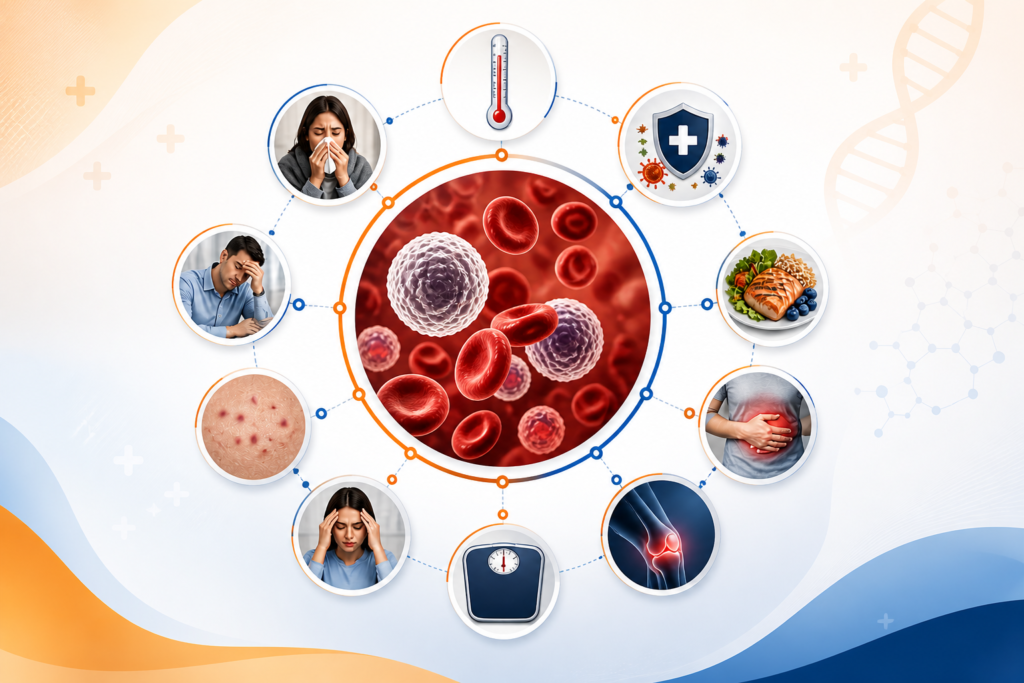
The early signs of leukaemia are similar to those of an ordinary illness. A fever that keeps coming back, a child who seems unusually tired, a few unexplained bruises. These things sometimes happen in perfectly healthy children.
This is why so many parents wonder: “What are the first signs of leukaemia?” The honest answer is that most families don’t know immediately. The early symptoms of leukaemia overlap almost entirely with common childhood illnesses.
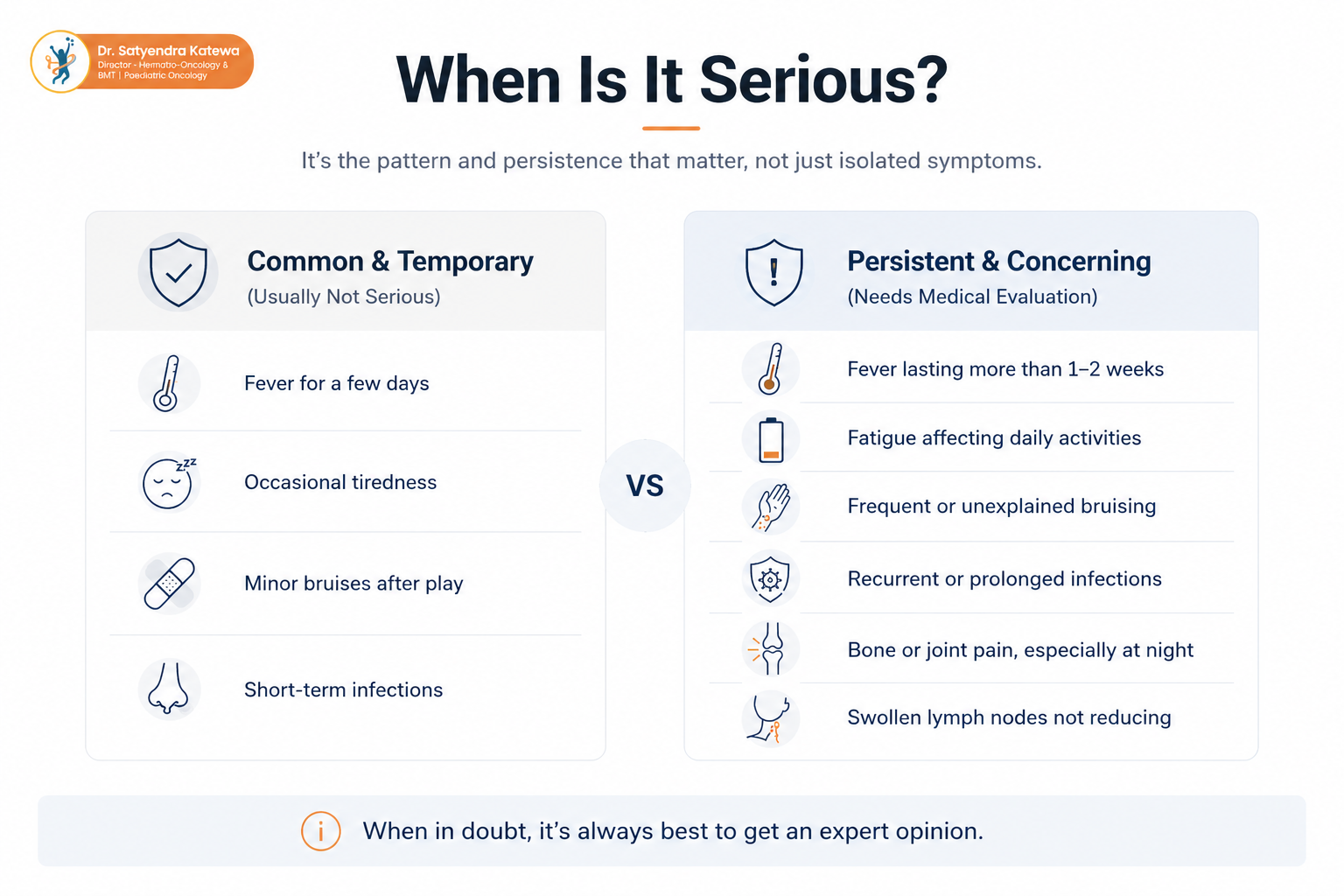
What changes the picture is the pattern, symptoms that persist, worsen, or appear together in a combination that doesn’t fit a simple viral infection.
The Leukaemia Rash: One of the Most Searched and Most Missed Signs
One of the most common things parents search for when something looks wrong is “leukaemia rash”. Skin changes are among the more visible early signals that something may be happening in the blood, and yet they are frequently mistaken for allergies, insect bites, or eczema.
Petechiae
- Leukaemia petechiae are small, pinpoint-sized red, purple, or brown spots that appear on the skin. Unlike a normal rash or bruise, petechiae do not fade or turn white when you press on them. This is the key test parents can do at home.
- Leukaemia petechiae on feet and lower legs are particularly common in children. Leukaemia petechiae in babies may appear on the face, particularly around the eyes, and can be alarming when first noticed.
- These spots occur because leukaemia depletes platelets, and when platelets fall, tiny blood vessels beneath the skin bleed spontaneously, creating these spots.
Leukaemia Spots and Bruise-Like Marks
- Leukaemia bruising in children is distinct from normal toddler bruising; it tends to appear in unusual locations (back, chest, face, upper arms), without any injury to explain it.
- Leukaemia bruising in toddlers follows a similar pattern, appearing in places a toddler wouldn’t typically fall, or in numbers that seem disproportionate to their activity level.
- Early stage leukemia rash on legs is among the most commonly described presentations. Child leukaemia rash and leukaemia rash in toddlers are searched by thousands of worried parents every month.
If you are reading this because of a rash you noticed, please read the section below on when to see a doctor.
10 Early Warning Signs of Leukaemia in Children
These are the core signs of leukaemia in kids that every parent should be familiar with. No single symptom confirms leukaemia, but a combination of these signs, or any one that persists beyond two to three weeks, deserves medical evaluation.
1. Persistent, Unexplained Fatigue
One of the most consistent childhood leukaemia symptoms is fatigue that simply doesn’t improve with rest. This is often what is the first sign of leukaemia that parents notice.
2. Pale Skin and Dark Circles Under the Eyes
Pallor is one of the clearest blood cancer symptoms in children.
Dark circles under a child’s eyes are another commonly noticed visual sign. While dark circles often have simple explanations (poor sleep, allergies), when they appear alongside other symptoms of leukaemia in children, they form part of a pattern worth investigating.
3. Recurring Fevers Without Clear Cause
Recurrent, unexplained fevers are among the key signs of leukaemia in children. In leukaemia, the body struggles to fight even minor infections, leading to fevers that return again and again, sometimes without any identifiable source.
A fever that comes back within days of clearing, or that appears without any respiratory or digestive illness, fits the profile of early leukaemia symptoms.
4. Leukaemia Rash, Petechiae, and Unexplained Bruising
As detailed in the section above, skin leukaemia symptoms, including petechiae, purpura, and unexplained bruising, are among the most visible early warning signs. Leukaemia bruising in children and leukaemia petechial rash in children both stem from a platelet deficiency that develops as the disease progresses.
5. Bleeding Gums and Mouth Sores
Bleeding gums in a child as a cancer sign is not widely talked about, but it appears in a significant number of families, describing how they first noticed something was wrong.
6. Bone and Joint Pain
Children with leukaemia often complain of aching legs, hip pain, or sore joints. Bone pain is among the acute leukemia symptoms most commonly described by families who later received a diagnosis.
7. Swollen Lymph Nodes
Painless, firm lumps under the jaw, in the neck, armpits, or groin that don’t go away after 2–4 weeks are a recognised sign of leukaemia.
8. Swollen or Distended Belly
When leukaemia cells accumulate in the liver and spleen, these organs enlarge. Abdominal swelling alongside other symptoms of childhood leukaemia is a combination that warrants urgent assessment.
9. Frequent or Severe Infections
A child who falls ill more often than their peers, whose infections take unusually long to clear, or who develops repeated chest infections, ear infections, or mouth infections may have a compromised immune system.
10. Night Sweats and Unexplained Weight Loss
Leukaemia symptoms in children also include night sweats, sheets soaked even in cool conditions, and gradual, unexplained weight loss or loss of appetite. These reflect the body’s systemic response to cancer cells and are more significant when they appear alongside other signs on this list.
What are the Treatment Options for childhood Leukaemia?
A diagnosis of childhood leukaemia today is not the same as it was a generation ago. Treatments have improved, and many children achieve full remission and go on to live completely normal lives.
The main approaches include:
Chemotherapy
In chemotherapy, powerful medicines that destroy rapidly dividing cancer cells. Read more about chemotherapy as a treatment option.
Targeted Therapy
Targeted therapy uses precision medicines that act specifically on the genetic mutations driving the cancer. Read more on the procedures page.
Immunotherapy and CAR-T Cell Therapy
It is one of the most exciting advances in modern oncology. CAR-T therapy involves modifying a patient’s own immune cells to recognise and destroy leukaemia cells. It has shown remarkable results in relapsed or refractory cases of ALL. Learn more about immunotherapy options.
Bone Marrow Transplant (BMT)
Bone marrow transplant is recommended for high-risk cases, relapsed leukaemia, or when the disease does not respond adequately to chemotherapy, a bone marrow transplant replaces the diseased marrow with healthy stem cells from a compatible donor.
Supportive Care
Complete supportive care includes blood transfusions, infection management, nutritional support, and palliative care to manage side effects and maintain quality of life through treatment. These are an integral part of every child’s treatment plan.
What is the survival rate of children with leukaemia?
This is the question every parent wants answered, and we will not be vague about it.
- For Acute Lymphoblastic Leukaemia (ALL), the most common type, cure rates in children have reached above 90% in many subtypes under optimal treatment protocols. This is one of the genuine success stories of modern medicine.
- For Acute Myeloid Leukaemia (AML), cure rates are lower but have improved significantly with modern chemotherapy combinations and access to bone marrow transplantation for eligible patients.
Are There Risk Factors Parents Should Know About?
In most cases of childhood leukaemia, no clear cause is identified. It is not caused by anything a parent did or didn’t do. However, certain factors can increase risk:
- Genetic conditions such as Down syndrome carry a higher risk of developing both ALL and AML.
- Children who have received radiation therapy or certain chemotherapy drugs for other cancers are at increased risk.
- Family history of leukaemia or certain inherited syndromes (Li-Fraumeni syndrome, Fanconi anaemia).
For children known to be at higher risk, regular medical monitoring and periodic blood counts are recommended.
Final Thoughts
Childhood blood cancer is serious, but it is also treatable, and outcomes are far better when it is found early. The signs are easy to miss individually, but together they can indicate a serious disorder.
Know the ten signs. Watch your child. And when your gut says something is not right, let a doctor confirm or rule it out. That one conversation might be the most important one you ever have.

 WhatsApp