
Wilms Tumor in Children
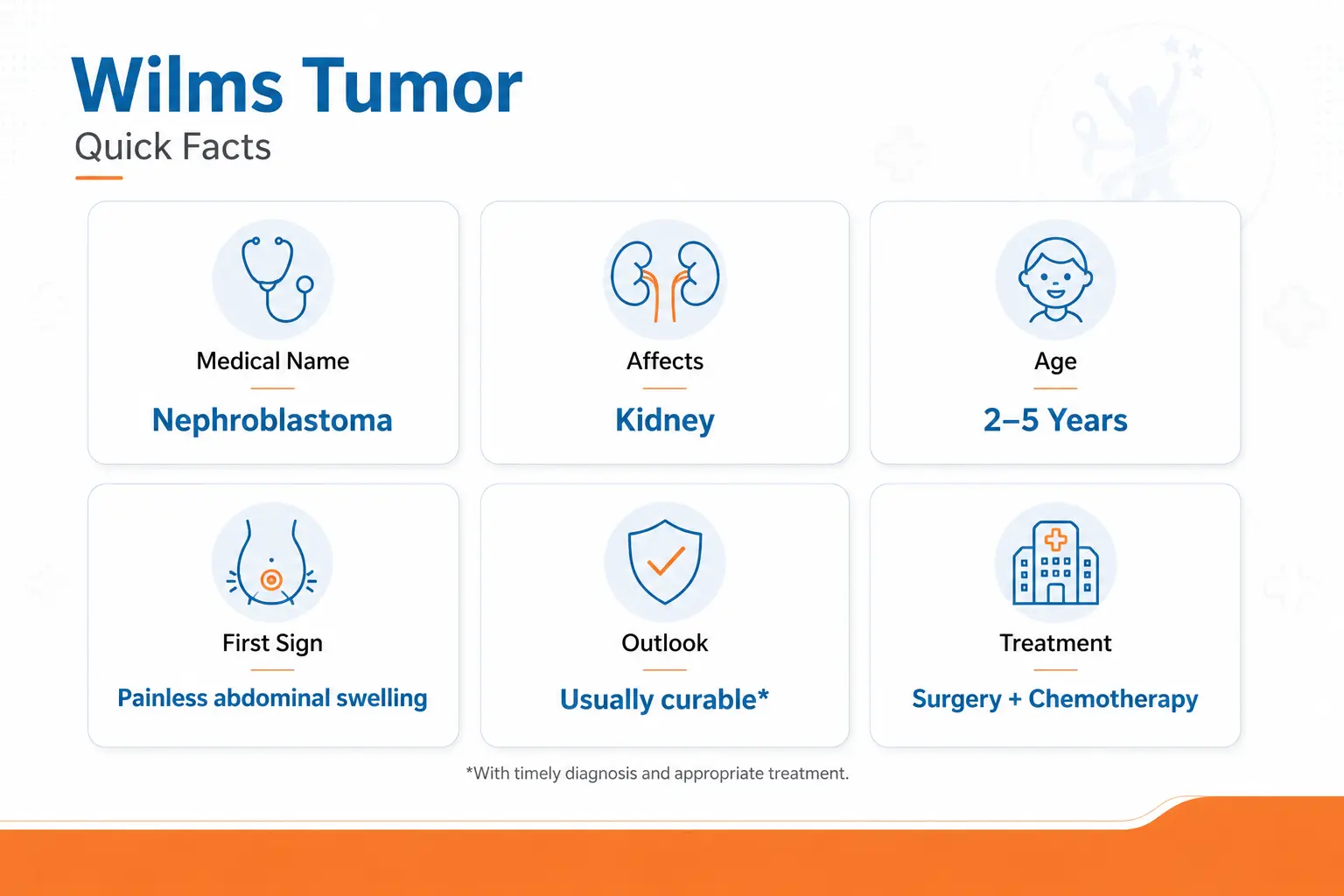
Wilms tumor, also known as nephroblastoma, is the most common kidney cancer in children, usually diagnosed between 2 and 5 years of age. It develops from immature kidney cells and often presents as a painless swelling in the abdomen. With timely diagnosis and treatment, including surgery and chemotherapy, most children achieve long-term survival.
Many parents first notice this chilhood kidney cancer unexpectedly, while bathing their child, or after seeing that one side of the abdomen looks fuller than the other. The child often appears otherwise well. This is why Wilms tumor is frequently found later than parents expect.
Parents often search for a Wilms tumor specialist after noticing an unusual abdominal swelling in their child. Early consultation with a paediatric haemato-oncologist can help ensure prompt diagnosis and appropriate treatment.
At Max Super Speciality Hospital, Patparganj, Delhi, Dr. Satyendra Katewa manages children with Wilms tumor and other complex paediatric blood cancers using treatment plans built around each child’s age, stage, and overall health.
Reach Out for Expert Care
What is Wilms Tumor?
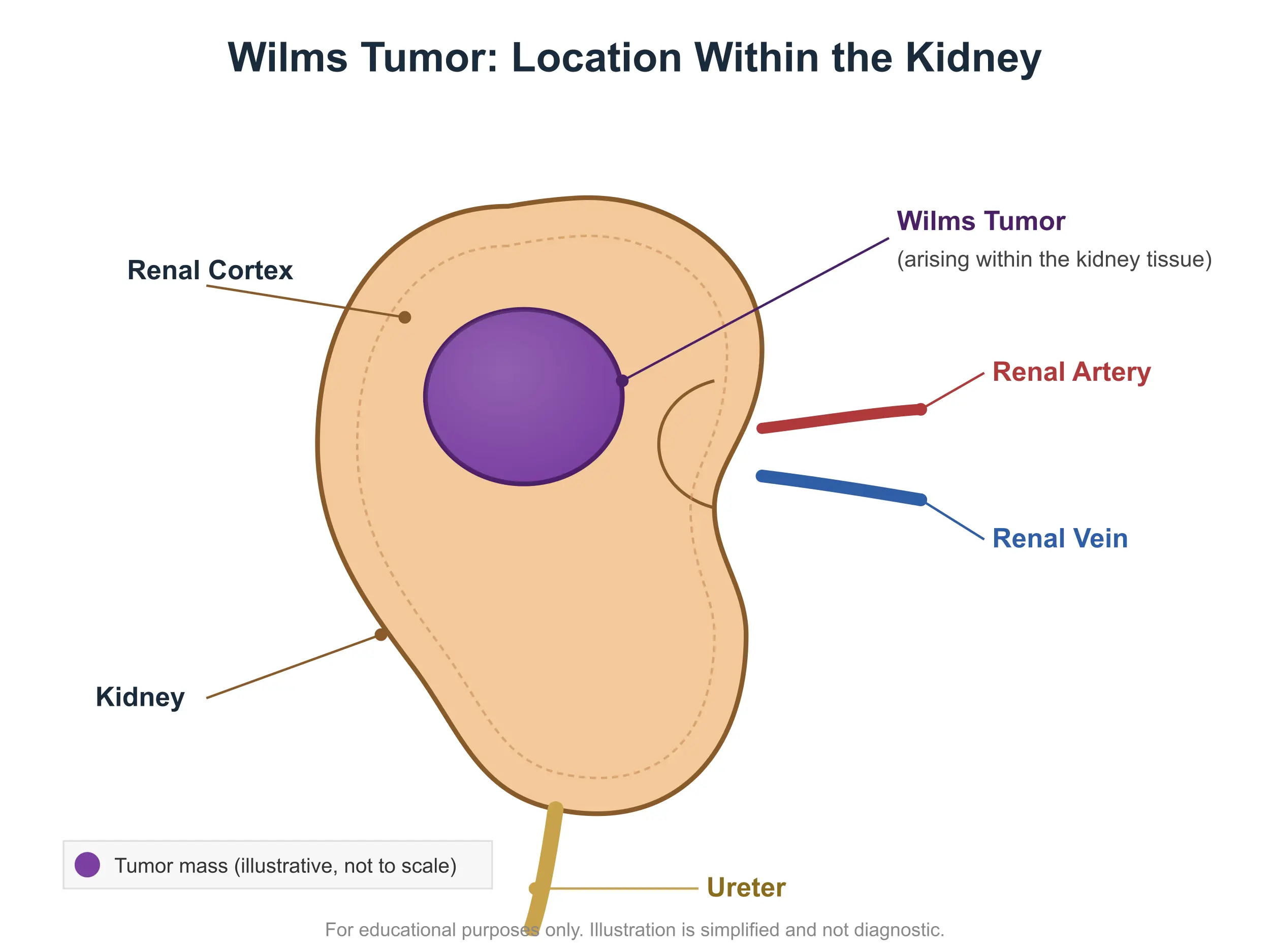
Wilms tumor is a cancer that develops from immature kidney cells that fail to mature normally during early childhood, most often affecting one kidney.
It is the most common type of kidney cancer in children and is sometimes called a paediatric kidney tumor. In most children, only one kidney develops a tumor. In a smaller number of cases, both kidneys are affected, a pattern doctors call bilateral Wilms tumor.
Wilms tumor behaves very differently from kidney cancer in adults. Adult kidney cancers, such as renal cell carcinoma, usually arise from mature kidney cells and are linked to lifestyle factors like smoking. Wilms tumor instead arises from embryonal kidney tissue that did not develop the way it should, which is part of why it responds so well to chemotherapy in children.
What Causes Wilms Tumor?
Most cases of Wilms tumor happen with no family history and no clear cause, arising from abnormal kidney cell development before birth.
Parents often wonder whether diet, an infection, or something they missed caused the tumor. In the large majority of children, this is simply not the case.
A small number of children have an inherited predisposition linked to certain genetic syndromes, covered in the risk factors section below. Even among these children, most still do not develop a strong family history of the disease.
Why Wilms Tumor is Sometimes Missed Initially?
One of the reasons Wilms tumor can be challenging to detect is that the early symptoms may resemble common childhood problems.
Many children are initially treated for:
- constipation
- gas or bloating
- stomach infection
- poor appetite
- worm infestation
- mild abdominal discomfort
A child may continue playing normally despite the tumour growing internally. This is why an unusual abdominal swelling in a child should never be ignored.
Parents can also read about other concerning cancer symptoms in children in our guide on Early Warning Signs of Childhood Blood Cancer.
Risk Factors for Wilms Tumor
Children with certain conditions like WAGR syndrome, Beckwith-Wiedemann syndrome or Denys-Drash syndrome present from birth may have a higher chance of developing Wilms tumor.
| Risk Factor | Description |
|---|---|
| WAGR syndrome | A rare genetic condition linked to Wilms tumor, eye abnormalities (aniridia), genitourinary defects, and developmental delay |
| Beckwith-Wiedemann syndrome | An overgrowth disorder in children that increases the risk of developing abdominal tumors, including Wilms tumor |
| Denys-Drash syndrome | A rare condition involving kidney dysfunction and genital abnormalities, associated with higher Wilms tumor risk |
| Hemihypertrophy | A condition where one side of the body grows larger than the other |
| Congenital urinary abnormalities | Structural differences in the kidney or urinary tract present from birth |
| Family history | Uncommon, but a small number of families do carry a hereditary predisposition |
Symptoms of Wilms Tumor in Children
The most common early sign of Wilms tumor is a painless swelling or lump on one side of a child’s abdomen, often noticed before any other symptoms appear.
The symptoms vary depending on the tumour size and whether it has spread beyond the kidney.
Common signs parents may notice include:
- A visible abdominal swelling
- Swelling on one side of the stomach
- Abdominal discomfort
- Fever without a clear infection
- Blood in urine
- Reduced appetite
- Fatigue or unusual tiredness
- Weight loss
- Vomiting
- Constipation
- High blood pressure in children
Some children are diagnosed only after imaging is done for unrelated abdominal complaints.
How Wilms Tumor is Diagnosed
Wilms tumor is usually diagnosed through imaging, most often an ultrasound, followed by a CT or MRI scan to confirm the size and extent of the tumor.
| Investigation | Purpose |
|---|---|
| Ultrasound abdomen | First-line imaging to detect a kidney mass |
| CT scan of abdomen and pelvis | Confirms tumor size, extent, and involvement of surrounding structures |
| MRI | Used in selected cases for more detailed imaging |
| Kidney function tests | Assess how well the kidneys are working |
| Blood investigations | General health assessment before treatment planning |
| Urine examination | Checks for blood or other abnormalities |
| Chest CT scan | Checks whether the cancer has spread to the lungs |
Stages of Wilms Tumor
Wilms tumor is classified into five stages, from Stage 1 (tumor confined to one kidney) to Stage 5 (tumors in both kidneys), which determines the treatment approach.
Doctors classify Wilms tumor into different stages based on how far the cancer has spread inside the body. Staging helps the pediatric oncology team determine the most appropriate treatment approach, including whether surgery, chemotherapy, or radiation therapy is needed.
Stage 1
The tumor is limited to one kidney and has not spread outside it. The cancer can usually be completely removed with surgery, and treatment outcomes at this stage are generally very favorable.
Stage 2
The tumor has started extending beyond the kidney into nearby tissues or blood vessels, but it can still be fully removed through surgery. Children at this stage often require chemotherapy after surgery to reduce the risk of recurrence.
Stage 3
Cancer cells remain within the abdomen after surgery, or the tumor has spread to nearby lymph nodes or surrounding tissues. In these cases, treatment usually involves a combination of surgery, chemotherapy, and sometimes radiation therapy.
Stage 4
The cancer has spread beyond the abdomen to distant organs, most commonly the lungs, liver, bones, or brain. Children with Stage 4 Wilms tumor usually require more intensive chemotherapy.
Stage 5
Both kidneys are affected by tumors at the time of diagnosis. The main goal in Stage 5 disease is to treat the cancer effectively while preserving as much healthy kidney tissue as possible to maintain long-term kidney function.
The stage of Wilms tumor plays a major role in determining treatment intensity, overall prognosis, and long-term follow-up planning.
Treatment of Wilms Tumor
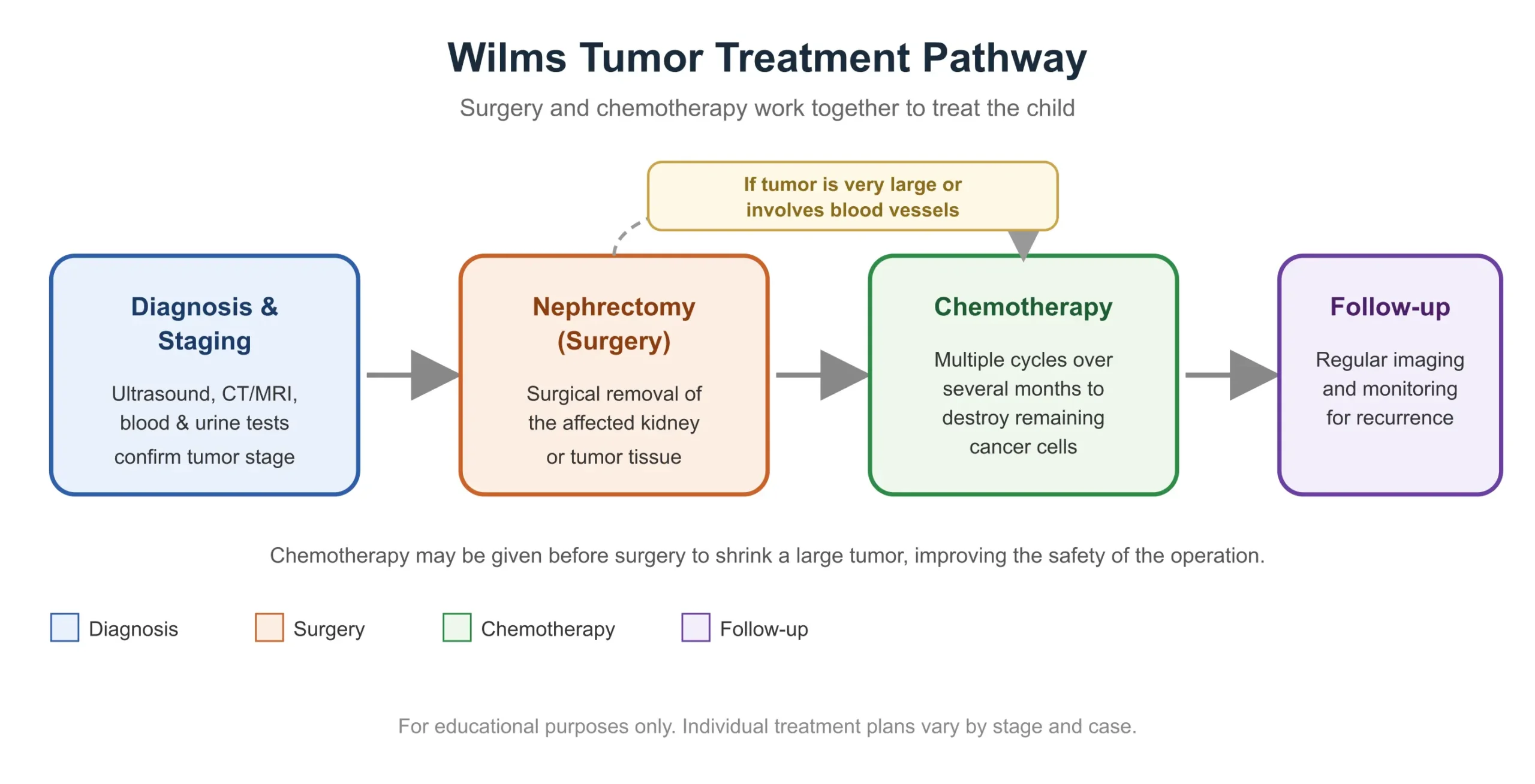
Wilms tumor is treated with a combination of surgery and chemotherapy, and is one of the most curable cancers in children when managed early.
Without proper treatment consultation, parents are worried about: whether the kidney will need removal, side effects of chemotherapy and future kidney function and, most importantly, whether the child can return to a normal life.
The good news is that children generally tolerate treatment better than adults, and cure rates for Wilms tumor are among the highest in paediatric cancers when managed properly.
Wilms tumor survival rate – As one of the most curable childhood cancers, Wilms tumor carries an overall 90% survival rate, though individual outcomes depend on the cancer’s stage and cell type.
Treatment may involve surgery, chemotherapy, blood component support, and other advanced paediatric oncology procedures, depending on tumour stage and response.
Surgery for Wilms Tumor
Surgery remains one of the most important parts of treatment. In many children, the affected kidney is removed through a procedure called nephrectomy.
However, treatment planning is not identical for every child.
If:
- The tumour is very large,
- involves nearby blood vessels,
- or both kidneys are affected,
Then chemotherapy may be started first to shrink the tumour before surgery. This approach helps improve the surgical safety of kidney tissue whenever possible.
Chemotherapy for Wilms Tumor
Chemotherapy for Wilms tumor is highly effective and forms the backbone of treatment in most children.
The medicines used depend on:
- tumour stage
- tumour histology
- spread to lungs or liver
- response to initial treatment
Children usually require multiple chemotherapy cycles over several months. During treatment, careful supportive care becomes extremely important to prevent infections and anaemia.
Why Consult a Wilms Tumor Specialist Like Dr. Satyendra Katewa?
Dr. Satyendra Katewa is a senior Paediatric Haemato-Oncologist and Bone Marrow Transplant specialist with experience in managing childhood cancers, blood disorders, and complex paediatric oncology cases.
Families across India consult him for:
- specialised paediatric oncology treatment
- difficult or relapsed childhood cancers
- multidisciplinary cancer care planning
- 25+ years of experience in treating childhood blood disorders and paediatric cancers
- advanced supportive care during chemotherapy
- 1000+ Successful BMT cases
- bone marrow transplant expertise
Treatment is provided at Max Super Speciality Hospital, Patparganj, Delhi, with access to dedicated paediatric oncology care facilities.
Worried About an Abdominal Swelling in Your Child?
An abdominal swelling in a child should never be ignored, especially if it continues to increase in size or appears only on one side of the abdomen. While many conditions may appear similar initially, some children are diagnosed with Wilms tumor only after imaging scans reveal a kidney mass.
You can book a consultation if your child has an abnormal ultrasound or a suspected kidney tumor
Consult Dr. Satyendra Katewa for expert management of Wilms tumor in children, chemotherapy planning, supportive care, and advanced paediatric oncology treatment in Delhi.
Frequently Asked Questions
Is Wilms tumor cancer? expand_more
Yes. Wilms tumor is a form of childhood kidney cancer
Can adults develop Wilms tumor? expand_more
Wilms tumor is rare in adults and occurs almost exclusively in children, most often between 2 and 5 years of age.
Can Wilms tumor spread? expand_more
Yes, in more advanced stages Wilms tumor can spread to the lungs, liver, bones, or brain, which is why staging and chest imaging are part of diagnosis.
Can Wilms tumor come back? expand_more
It can occasionally return after treatment, which is why regular follow-up scans are part of long-term care.
Is Wilms tumor curable? expand_more
Yes, most children with Wilms tumor can be cured, especially when the disease has favorable histology and is treated promptly. Outcomes depend on stage, histology, and response to treatment.
Does Wilms tumor cause fever? expand_more
Yes. Wilms tumor can sometimes cause fever, although it is not the most common symptom. Many children first develop a painless abdominal swelling or lump. Fever may occur if the tumor causes inflammation or if there is an associated infection.
What is the first-line treatment for Wilms tumor? expand_more
Treatment usually begins with surgery or chemotherapy, depending on the tumour stage, size, and whether one or both kidneys are affected. Most children receive a combination of surgery and chemotherapy as part of their treatment plan.
How long does Wilms tumor treatment take? expand_more
Treatment typically lasts several months. The exact duration depends on the tumour stage, histology, and the child's response to treatment.

Dr. Satyendra Katewa's Medical Content Team
Dr. Satyendra Katewa’s medical content team specialises in developing accurate, evidence-based, and patient-focused healthcare content. With strong clinical insight and expertise in medical writing and SEO, the team simplifies complex haematology and oncology information into clear, trustworthy resources that support informed decision-making and reflect Dr. Katewa’s commitment to ethical, compassionate care.
This content is reviewed by Dr. Satyendra Katewa
 WhatsApp