
Blood Cancer in Children: What Should Parents Do First After Diagnosis?

If you’ve just been told that your child has blood cancer, you’re probably feeling shocked, frightened, and overwhelmed. Many parents describe the first few days after diagnosis as a blur. Questions race through your mind: Is my child going to be okay? What happens next? Am I making the right decisions?
The most important thing to know is that blood cancer in children is one of the most treatable forms of cancer, and the steps you take in the first few days can make a meaningful difference in the outcome
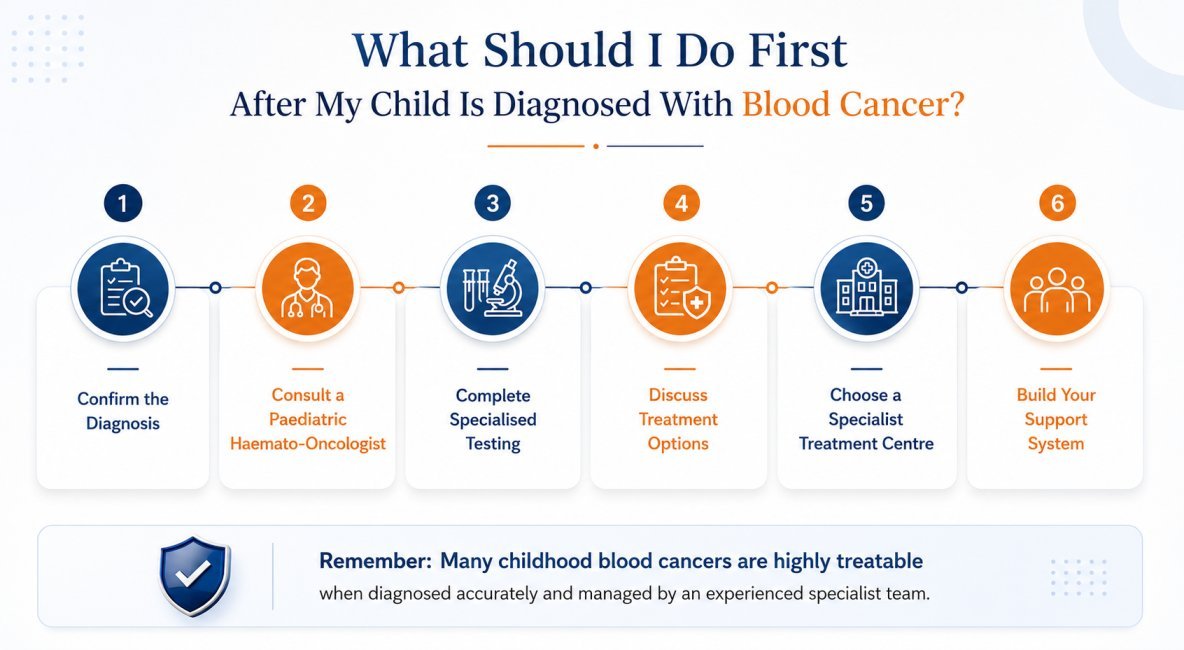
This guide walks you through exactly what to do first in the right order, with the right priorities.
Step 1: Understand What Type of Blood Cancer Your Child Has
Blood cancer in children is a group of conditions, and the type your child has will determine everything the treatment plan, the specialists involved, and the likely outcome.
The most common types of blood cancer in children include:
- Acute Lymphoblastic Leukaemia (ALL) the most common blood cancer in children, with survival rates above 90% in many cases.
- Acute Myeloid Leukaemia (AML) – less common than ALL but requires intensive treatment
- Hodgkin Lymphoma – a highly treatable cancer of the lymphatic system
- Non-Hodgkin Lymphoma – more varied in behaviour, requiring different treatment approaches depending on the subtype
Ask the diagnosing doctor to explain clearly which type your child has been diagnosed with. If they have not yet confirmed the exact type, that confirmation is the next step before any treatment begins.
Step 2: Do Not Start Treatment Without a Specialist Opinion
Many parents feel pressure to begin treatment immediately after a diagnosis. This is completely understandable. However, before treatment begins, it is important to ensure your child is being evaluated by the right specialist.
Blood cancer in children should be managed by a Paediatric Haemato-Oncologist, a doctor who specialises in treating blood cancers in infants, children, and adolescents. Parents often search for the best paediatric haemato-oncologist or an expert childhood blood cancer specialist, but the key is finding a doctor with extensive experience in treating childhood leukaemia, lymphoma, and bone marrow disorders.
If your child’s diagnosis was made in a non-specialist setting, seek a referral to an experienced paediatric haemato-oncology centre as soon as possible.
Step 3: Get the Diagnosis Confirmed With the Right Tests
A diagnosis of blood cancer in children must be confirmed through specific investigations. A complete picture is needed before a treatment plan can be made.
These tests typically include:
- Complete Blood Count (CBC) – to assess the levels of red blood cells, white blood cells, and platelets
- Bone Marrow Biopsy – the definitive test to confirm the type and extent of blood cancer
- Flow Cytometry – to identify the exact subtype of leukaemia or lymphoma
- Cytogenetics and Molecular Testing – to detect specific genetic markers that affect treatment response and prognosis
- Imaging (CT or PET scan) – particularly for lymphomas, to assess spread
Do not proceed to treatment on the basis of a CBC result alone. A full diagnostic workup is essential.
Step 4: Ask These Questions at Your First Specialist Appointment
Parents often leave their first oncology appointment without clarity simply because the situation feels too overwhelming to ask questions. Prepare these questions in advance:
- What exact type of blood cancer does my child have?
- What stage or risk category is it?
- Will my child need a Bone Marrow Transplant, and at what stage?
Step 5: Centralise Your Child’s Care at One Specialist Centre
One of the most common mistakes families make in the early days after a diagnosis is consulting multiple hospitals simultaneously and receiving conflicting advice.
Once you have identified an experienced Paediatric Haemato-Oncologist or childhood blood cancer specialist you trust, it is usually best to centralise your child’s care at a dedicated paediatric haemato-oncology centre. These centres bring together specialists in childhood leukaemia, lymphoma, supportive care, and bone marrow transplantation, ensuring that every aspect of treatment is coordinated under one team.
Step 6: Understand What Causes Blood Cancer in Children
What causes blood cancer in children is not fully understood, but research points to:
- Genetic factors – certain chromosomal changes that occur during cell development, often before birth
- Inherited conditions – children with Down syndrome or certain inherited bone marrow failure syndromes have a higher risk
- Prior radiation exposure – in rare cases, previous radiation treatment increases risk
- Immune system conditions – some immunodeficiency disorders are associated with higher lymphoma risk
What does not cause blood cancer in children:
- Diet or nutrition during pregnancy
- Vaccinations
- Normal childhood infections
- Anything the parent could have prevented
Understanding this can help families redirect energy away from blame and toward treatment.
Step 7: Prepare Practically for the Treatment Journey Ahead
Blood cancer treatment in children typically spans several months to years depending on the type and stage. Practical preparation in the first few weeks helps significantly.
- Arrange extended leave from work if possible, as hospital visits will be frequent
- Speak to your child’s school about planned absences and explore home-schooling or hospital-based education options
- Set up a support system identify family members or close friends who can help with logistics, meals, and sibling care
- Understand your health insurance coverage and what it does and does not cover for blood cancer treatment in children
- Keep a medical file with all reports, scan results, biopsy reports, and prescription records in one place
What Happens Next: An Overview of Treatment for Blood Cancer in Children
Treatment depends entirely on the type and stage of blood cancer. In general:
- Leukaemia (ALL and AML) is treated with chemotherapy delivered in phases: induction, consolidation, and maintenance. Some high-risk cases require a Bone Marrow Transplant.
- Hodgkin Lymphoma is treated with a combination of chemotherapy and, in some cases, radiation. Outcomes are excellent.
- Non-Hodgkin Lymphoma treatment varies by subtype but frequently involves chemotherapy, immunotherapy, or targeted therapy.
If your child has recently been diagnosed with blood cancer and you would like a specialist opinion, you can schedule a consultation with Dr. Satyendra Katewa, one of the leading Paediatric Haemato-Oncologists and Bone Marrow Transplant Specialists in Delhi.

 WhatsApp