
Early Signs of Deep Vein Thrombosis in Children

Deep vein thrombosis (DVT) is a blood clot that forms in a deep vein, usually in the leg or arm. It is rare in healthy children but becomes more likely during blood cancer treatment in children. Chemotherapy, central venous catheters, and long hospital stays can raise the risk.
The earliest signs of DVT are swelling, warmth, and tenderness in one limb, often the leg. Redness or a visible colour change in the affected area may appear before the swelling becomes obvious.
Catching the early signs of DVT matters because a clot can grow or travel to the lungs if missed.
This article explains what to watch for, how paediatric oncologists confirm DVT, and when parents should seek help right away.
Quick Facts
| Aspect | Details |
| Medical Name | Deep vein thrombosis (DVT) |
| Who is at Risk | Children on chemotherapy, those with a central venous catheter, or undergoing bone marrow transplant |
| Common Symptoms | Swelling, pain, warmth, redness in one limb |
| Diagnosis | Physical exam, D-dimer test, Doppler ultrasound |
| Treatment | Blood thinners, monitoring, rarely surgery |
| Emergency Sign | Sudden breathlessness or chest pain |
What Are the Early Signs of Deep Vein Thrombosis?
The earliest signs of deep vein thrombosis are one-sided swelling, warmth, and tenderness in a limb.
Parents often notice one leg or arm looks different from the other. This is one of the clearest early clues.
Watch for:
- Swelling that appears suddenly in one leg or arm
- Warmth over the swollen area
- Pain or tenderness, sometimes described as cramping
- Redness or a change in skin colour
In children with a central venous catheter, swelling in the arm or shoulder near the catheter can also be an early sign. This is known as catheter-associated thrombosis and is common enough to watch for during chemotherapy or leukaemia treatment.
What Causes These DVT Symptoms to Appear?
Symptoms of DVT appear when a clot blocks normal blood flow in a deep vein, causing blood and fluid to build up behind it.
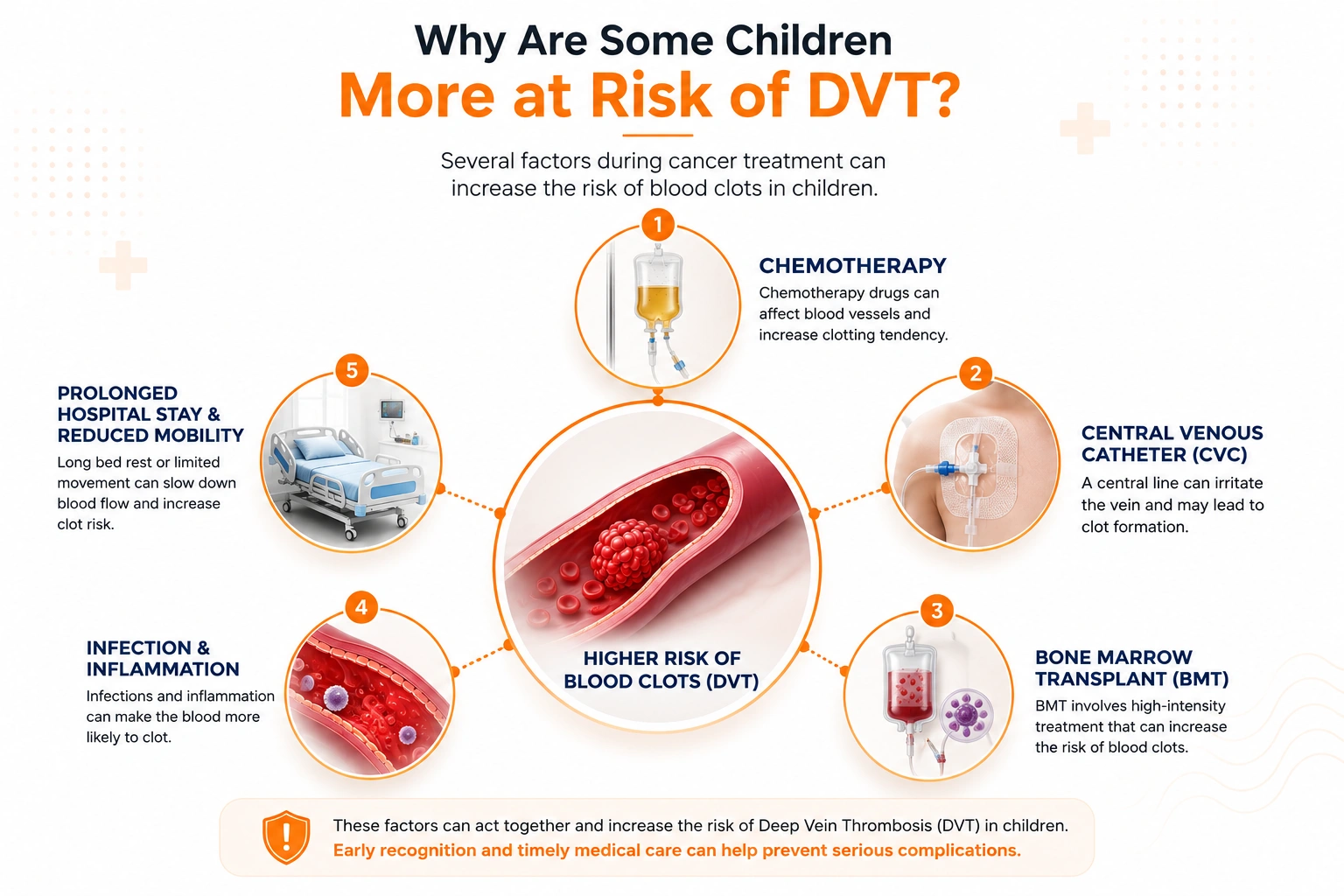
In children being treated for cancer, several factors raise this risk together:
- Chemotherapy affecting vessel linings and clotting factors
- A central venous catheter irritating the vein wall
- Long periods of reduced movement during hospital admission
- Inflammation from cancer, infection, or lymphoma treatment
Children undergoing a bone marrow transplant often have several of these factors present at once, which is why symptom awareness matters most during that period.
How Is Deep Vein Thrombosis Diagnosed?
DVT is diagnosed through a physical exam, a D-dimer blood test, and a Doppler ultrasound to confirm the clot’s location.
- Physical exam: the doctor compares both limbs for swelling, warmth, and tenderness
- D-dimer test: a blood test that checks for a substance released when a clot breaks down
- Doppler ultrasound: uses sound waves to check blood flow and confirm a blockage
- CT or MR venography: used for clots higher in the body, such as near the chest
A normal D-dimer result makes DVT less likely, but ultrasound is usually needed to confirm or rule it out.
Can These DVT Symptoms Lead to Complications?
Yes, ignored DVT symptoms can lead to pulmonary embolism, a serious condition where part of the clot travels to the lungs.
Other possible complications include:
- Post-thrombotic syndrome: ongoing swelling or discomfort in the limb after the clot heals
- Recurrence: a higher chance of another clot forming, especially if a central line stays in place
- Pulmonary embolism: the most serious complication, needing emergency care
Most children treated early do not experience these complications. This is why early recognition of swelling or pain is so important, particularly in children with blood disorders or ongoing cancer treatment.
When Should Parents Seek Immediate Medical Help?
Parents should seek emergency care if a child has sudden breathlessness, chest pain, or a rapid heartbeat alongside limb swelling.
Contact your child’s care team the same day if you notice:
- New, one-sided swelling in a leg or arm
- Skin that is warm, tender, or discoloured
- Sudden difficulty breathing
- Chest pain, especially when breathing in
These last two signs can indicate a clot has reached the lungs and need emergency evaluation without delay.
Specialist Care for Children Undergoing Chemotherapy or Bone Marrow Transplant
Children undergoing treatment for leukaemia, lymphoma, bone marrow failure syndromes, thalassaemia, sickle cell disease, or a bone marrow transplant are at a higher risk of developing treatment-related complications, including deep vein thrombosis (DVT). If your child develops unexplained swelling, pain, redness, warmth in a limb, or difficulty breathing during chemotherapy or after a bone marrow transplant, these symptoms should never be ignored. While many cases are not caused by DVT, prompt medical evaluation is essential to rule out serious complications and begin treatment if required.
As a Paediatric Haemato-Oncologist and Bone Marrow Transplant Specialist, Dr. Satyendra Katewa provides comprehensive care not only for childhood blood disorders and cancers but also for the complications that may arise during treatment. With over 25 years of experience, 1,000+ paediatric bone marrow transplants, and 10,000+ children treated, he has extensive expertise in managing leukaemia, lymphoma, thalassaemia, sickle cell disease, aplastic anaemia, primary immunodeficiencies, and treatment-related conditions such as blood clots and infections.
His goal is to ensure every child receives timely, evidence-based care throughout their treatment journey, from diagnosis to recovery.

 WhatsApp