
Foods to Increase Platelet Count Naturally: A Pediatric Specialist’s Guide
Quick Summary
- Normal platelet count is 1,50,000 – 4,50,000 per µL. Below 1,00,000 needs monitoring; below 20,000 is a medical emergency.
- Food can support platelet production when low counts are linked to nutritional deficiencies – but food alone cannot fix immune, infectious, or bone-marrow causes.
- The most evidence-backed nutrients are folate, vitamin B12, vitamin C, iron, and vitamin K – all found in everyday Indian foods.
- Papaya leaf extract has the most clinical interest for dengue-related low platelets, though evidence is still mixed.
- If your child has bleeding that won’t stop, blood in urine/stool, or sudden severe bruising – go to a hospital immediately. Do not wait.
What Are Platelets and Why Do They Drop?
Platelets are blood cells made in the bone marrow that help blood clot and stop bleeding. A healthy child has roughly 1,50,000 to 4,50,000 platelets per microlitre of blood.
Thrombocytopenia is a medical condition characterized by an abnormally low number of platelets in the blood, which increases the risk of bruising and bleeding.The three reasons platelets drop:
- Not enough are made – bone marrow problems, nutritional deficiencies (folate, B12, iron), leukemia, or chemotherapy.
- Too many are destroyed – the immune system attacks them (called ITP, or Immune Thrombocytopenia), or a viral infection like dengue triggers destruction.
- Platelets are trapped – an enlarged spleen holds onto platelets instead of releasing them into circulation.
Dr. Satyendra Katewa, a renowned Pediatric Hematologist, Pediatric Haemato-Oncologist, and Bone Marrow Transplant Specialist in Delhi with over 25 years of experience, highlights that foods rich in folate, vitamin B12, iron, vitamin C, and vitamin K support healthy platelet production, but dietary changes should complement, not replace, medical treatment for thrombocytopenia and other blood disorders in children.
Top Foods to Increase Platelet Count Naturally
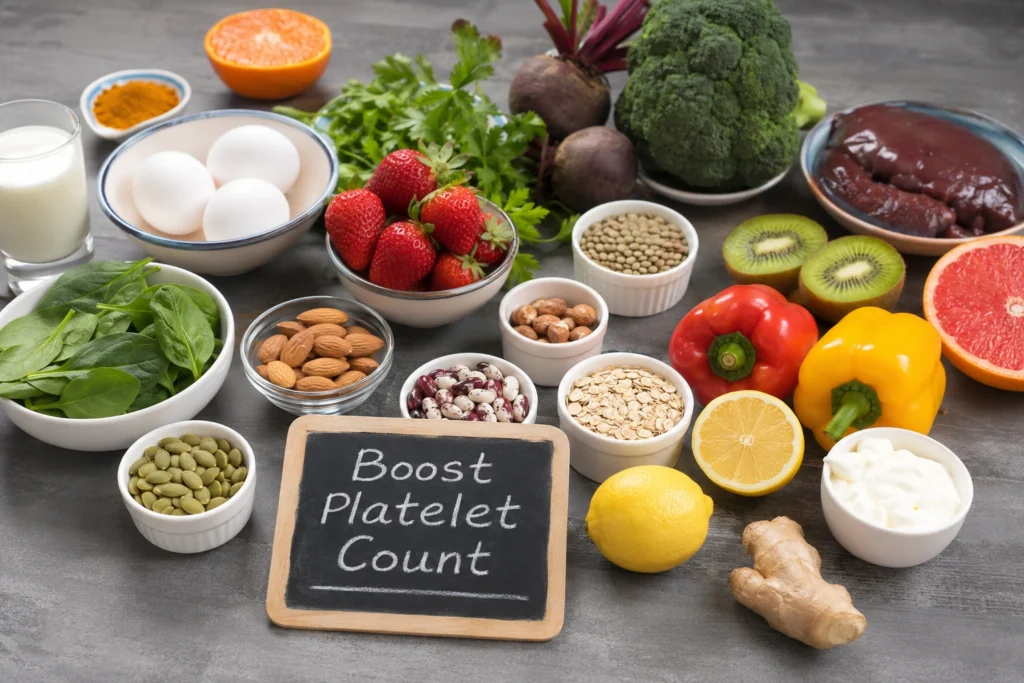
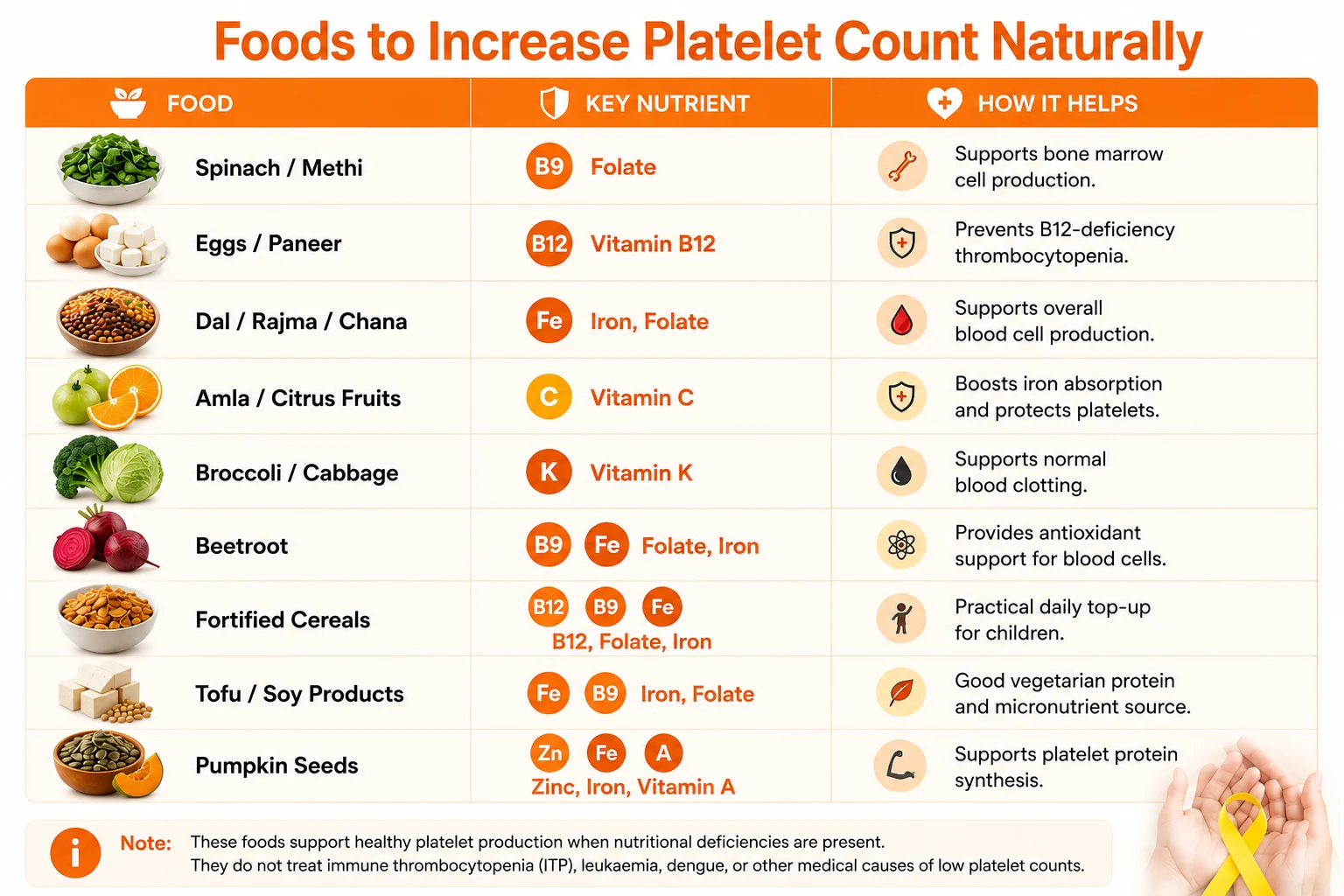
The goal here is to give your body the raw materials it needs to make healthy platelets and red blood cells. These are the nutrients that matter most – folate, vitamin B12, vitamin C, iron, and vitamin K – and the everyday foods that deliver them.
1. Spinach and Dark Leafy Greens
Key nutrient: Folate (Vitamin B9)
Folate is essential for cell division in the bone marrow – without it, platelet production slows down.
Methi (fenugreek leaves), palak, and mustard greens are all excellent choices readily available across India.
2. Eggs and Dairy
Key nutrient: Vitamin B12
Vitamin B12 deficiency is surprisingly common in Indian children, Low B12 impairs bone marrow function and can cause both anemia and thrombocytopenia simultaneously.
Paneer, curd, and milk are good vegetarian sources.
3. Lean Meat, Lentils, and Pumpkin Seeds
Key nutrient: Iron
Iron deficiency doesn’t directly lower platelet count, but it weakens overall blood cell production and is often found alongside low platelets.
Dal, rajma, chana, spinach, and lean chicken are the practical everyday sources for Indian families.
Pair iron-rich foods with a vitamin C source (lemon juice, amla) to nearly double absorption.
4. Citrus Fruits, Bell Peppers, and Broccoli
Key nutrient: Vitamin C
Vitamin C does two things: it boosts iron absorption, and it protects platelets from oxidative damage. It also supports the immune system – relevant when low platelets follow a viral illness.
A single amla (Indian gooseberry) contains 600–700 mg of vitamin C – roughly ten times the amount in an orange.
5. Broccoli, Kale, and Cabbage
Key nutrient: Vitamin K
Vitamin K is critical for blood clotting. While it doesn’t directly raise platelet number, a deficiency makes bleeding worse even when platelet counts are borderline. Broccoli, cabbage, and leafy greens are the best sources.
6. Fortified Cereals and Whole Grains
Key nutrients: Folate, B12, Iron
Many breakfast cereals sold in India are fortified with B12, folate, and iron – making them a practical daily top-up, especially for children who are picky eaters. Check the label for “fortified with vitamins and minerals.”
7. Tofu and Soy Products
Key nutrients: Iron, Folate, Protein
Tofu is a practical protein source for vegetarian families and provides a meaningful amount of iron and folate. It’s also easy to incorporate into Indian cooking – in curries, parathas, or bhurji.
8. Beetroot
Key nutrients: Folate, Iron, Antioxidants
Beetroot is popular in India as a “blood builder” – and there’s some logic to it. It’s rich in folate and iron, and its antioxidants may help protect blood cells. It won’t dramatically raise platelet counts on its own, but it’s a genuinely useful addition to the diet.
9. Pumpkin and Pumpkin Seeds
Key nutrients: Vitamin A, Iron, Zinc
Pumpkin contains vitamin A, which plays a role in protein synthesis needed for platelet production. Pumpkin seeds are rich in zinc and iron. Both are inexpensive and widely available across India.
Foods to Avoid When Platelets Are Low
Just as important as what to eat – here’s what to cut out or reduce.
- Alcohol is the most important item to avoid. It directly suppresses bone marrow production of platelets and is toxic to the cells that make them. Even moderate amounts worsen thrombocytopenia.
- Quinine-containing drinks – tonic water and bitter lemon – can trigger immune destruction of platelets in susceptible individuals. This is a well-documented drug-food interaction.
- NSAIDs (ibuprofen, aspirin) don’t lower platelet count, but they impair platelet function – meaning even the platelets you have won’t clot properly. When platelets are already low, this significantly increases bleeding risk. Use paracetamol instead, and only under medical guidance.
- Ultra-processed foods, fried foods, and high-sugar foods don’t directly harm platelets, but they crowd out the nutrient-dense foods your body actually needs.
- Cranberry juice in large amounts may also have mild antiplatelet properties; worth limiting when counts are very low.
Does Milk Increase Platelet Count?
This is one of the most common questions parents have – especially during dengue season, when claims about goat milk circulate widely on WhatsApp.
The honest answer – no, milk does not directly increase platelet count.
The Platelet Disorder Support Association (PDSA) states clearly that there is no scientific evidence that specific foods can reliably boost a low platelet count. Research on milk and platelets mostly looks at platelet aggregation (how platelets clump), not platelet number – and some milk proteins (like lactoferrin) actually have mild anti-platelet aggregation effects.
Cow’s milk and goat’s milk do contain vitamin B12, calcium, and some vitamin K – nutrients that support overall blood health. So milk is a good, nutritious food and perfectly fine to include in the diet, but it’s not a platelet treatment, and families should not delay medical care in the hope that milk will raise counts.
Bottom line: Drink milk as part of a balanced diet. Don’t rely on it to fix low platelets.
Does papaya leaf juice increase platelet count?
Some studies suggest that papaya leaf extract may help increase platelet counts in people with dengue, but the evidence remains mixed and more high-quality research is needed. It is not a proven treatment for thrombocytopenia caused by immune disorders, bone marrow diseases, or leukemia.
If you or your child has a low platelet count, consult a paediatric haematologist rather than relying on home remedies alone.
How Long Does It Take for Food to Raise Platelet Count?
Food works slowly – and only when the cause is nutritional.
- Days: No meaningful change from diet alone. Don’t expect a blood test on day 3 to show dramatic improvement from dietary changes alone.
- Weeks (2- 4 weeks): If the cause is a correctable deficiency – low folate, B12, or iron – counts may start improving within 2- 4 weeks of consistent dietary correction. Some studies show improvements of 20,000–50,000/µL within this timeframe when deficiency is the root cause.
- Not at all from food alone: If the cause is ITP, dengue, leukaemia, medication, or bone marrow disease, dietary changes will not fix the problem. Medical treatment is essential.
The takeaway: food is a support, not a cure. Use it alongside medical treatment, not instead of it.
While foods can support healthy platelet production, children with severe thrombocytopenia, leukemia, aplastic anaemia, or treatment-related low platelet counts may require platelet and plasma transfusion under the care of an experienced paediatric haematologist.
Explore Platelet and Plasma Transfusion Treatment in Delhi
Final Thoughts
Eating the right foods to increase platelet count naturally can support your body’s ability to produce healthy blood cells, especially when low platelet counts are linked to nutritional deficiencies such as low folate, vitamin B12, iron, or vitamin C. Including a balanced diet with leafy green vegetables, legumes, citrus fruits, dairy, lean proteins, and other nutrient-rich foods can contribute to overall blood health.
However, it’s important to remember that food alone cannot treat thrombocytopenia caused by conditions such as immune thrombocytopenia (ITP), dengue, leukemia, bone marrow disorders, or the side effects of certain medications. If your child has a persistently low platelet count, frequent bruising, bleeding, or recurrent infections, timely medical evaluation is essential to identify the underlying cause and begin appropriate treatment.
If you’re concerned about your child’s platelet count or any paediatric blood disorder, consult Dr. Satyendra Katewa, an experienced Paediatric Haematologist, Paediatric Haemato-Oncologist, and Bone Marrow Transplant (BMT) Specialist in Delhi. An accurate diagnosis, combined with the right treatment and nutritional support, offers the best chance for healthy recovery and long-term well-being.

 WhatsApp