
How Is Thalassemia Inherited? Understanding Carrier Status and Genetic Risk
Thalassemia is an inherited genetic blood disorder passed from parents to their children. A child develops the condition when they inherit altered haemoglobin genes from both parents. Individuals who inherit only one altered gene are usually carriers, also known as having the thalassemia trait.
Key Facts
✓ Thalassemia is inherited, not contagious.
✓ Carrier status usually causes no serious health problems.
✓ A child develops thalassemia only when both parents pass on an altered gene (for common autosomal recessive forms such as beta thalassemia).
✓ Genetic counselling helps couples understand inheritance and family planning options.
What Causes Thalassemia? Understanding the Genetic Basis
Thalassemia is an inherited genetic blood disorder that affects the body’s ability to produce healthy haemoglobin.
The condition develops because of changes (mutations) in the genes that control haemoglobin production. These genetic changes are present from birth and are passed from parents to their children. Unlike infections or nutritional deficiencies, thalassemia is not contagious and cannot be acquired later in life.
Haemoglobin consists of two important protein chains:
- Alpha globin
- Beta globin
When mutations affect either of these chains, the body produces less healthy haemoglobin, leading to different forms of thalassemia.
Thalassemia is broadly classified into two main types based on the affected gene.
- Alpha Thalassemia
Alpha thalassemia occurs when one or more of the four alpha-globin genes are missing or altered. The severity depends on how many genes are affected.
- Beta Thalassemia
Beta thalassemia occurs when changes affect one or both of the beta-globin genes inherited from each parent. This form includes conditions such as beta thalassemia trait (carrier state) and beta thalassemia major.
In general, the greater the number of affected genes, the more significantly haemoglobin production is reduced.
What Does Thalassemia Carrier Status Mean?
A person is called a thalassemia carrier when they inherit one altered haemoglobin gene and one normal gene. This is also known as having the thalassemia trait or thalassemia minor.
Most carriers remain completely healthy because the normal gene continues to produce enough haemoglobin for everyday needs. Many people discover they are carriers only after routine blood tests, premarital screening, antenatal screening, or family investigations.
In some cases, carriers may have mild anaemia or slightly smaller red blood cells, but these findings usually do not interfere with normal daily life.
Carrier (Trait) vs Thalassemia Major
Although these terms are sometimes confused, they describe very different situations.
| Feature | Thalassemia Carrier (Trait) | Thalassemia Major |
| Altered genes | One | Two (in common autosomal recessive forms such as beta thalassemia) |
| Symptoms | Usually none or mild anaemia | Moderate to severe anaemia |
| Daily life | Usually normal | Requires ongoing specialist care |
| Regular blood transfusions | Not required | Often required |
| Can pass the gene to children | Yes | Yes |
Understanding whether someone is a carrier is particularly important when planning a family, as the combination of both parents’ genetic status influences the chances of a child inheriting thalassemia.
How Is Thalassemia Inherited?
Thalassemia is inherited through an autosomal recessive pattern for common forms such as beta thalassemia. This means a child usually needs to inherit an altered gene from both parents to develop the condition.
If only one altered gene is inherited, the child generally becomes a healthy carrier rather than developing the disease.
When Both Parents Are Carriers
When both parents carry the thalassemia trait, each pregnancy has the following possibilities:
- 25% chance of a child without thalassemia who is not a carrier
- 50% chance of a child who is a healthy carrier
- 25% chance of a child born with thalassemia major
These probabilities apply independently to each pregnancy and do not change based on previous pregnancies.
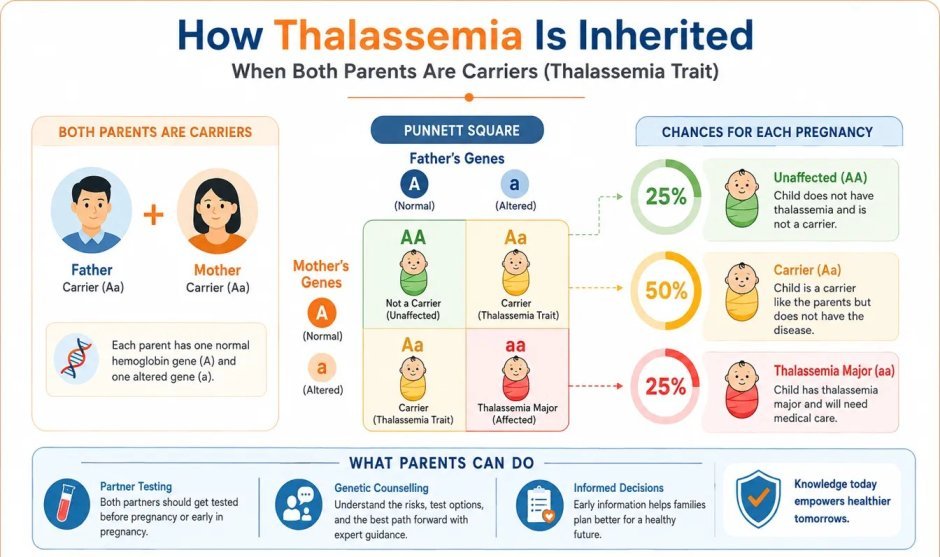
Note: This illustration applies when both parents are carriers of the same autosomal recessive form of thalassemia. Individual risks may vary depending on the specific genetic mutation, so personalised genetic counselling is recommended.
Can Someone With the Thalassemia Trait Live a Normal Life?
Yes. Most people with the thalassemia trait live completely healthy, active lives without any restrictions.
Carrier status does not develop into thalassemia major over time and generally does not require long-term treatment. Many individuals remain unaware they are carriers until routine blood investigations identify the trait.
The main importance of carrier status lies in future family planning rather than personal health.
For families where the full disorder is diagnosed rather than the trait and those searching for a thalassemia bone marrow transplant expert or a Hemato-oncologist in Delhi NCR , timely treatment can still lead to a complete, lasting recovery. Dr. Satyendra Katewa, a paediatric haemato-oncologist and bone marrow transplant specialist with over 25 years of experience, has led more than 1000 BMT cases for children with complex blood disorders, including thalassemia major.
One recent case at Max Hospital involved a five-year-old girl whose family found hope through a half-matched bone marrow transplant, even without a fully compatible sibling donor. You can read her full journey here. Outcomes like hers reflect what experienced, specialised care can achieve even in difficult cases. For most families reading this guide, though, understanding carrier status early remains the simplest and most powerful step toward avoiding that path altogether.
Need Guidance About Thalassemia Carrier Status?
Discovering that you or your partner is a thalassemia carrier can raise important questions about genetic inheritance, pregnancy, and family planning. Consulting a paediatric haematologist can help you understand your test results, assess genetic risks, and discuss carrier screening, prenatal testing, and available treatment options where appropriate.
Dr. Satyendra Katewa specialises in the diagnosis and management of thalassemia, sickle cell disease, inherited blood disorders, and bone marrow transplant (BMT) in children. Seeking expert guidance early can help families make informed healthcare decisions with confidence.

 WhatsApp