
No Sibling Donor for Bone Marrow Transplant? Alternative Donor Transplant Options for Children
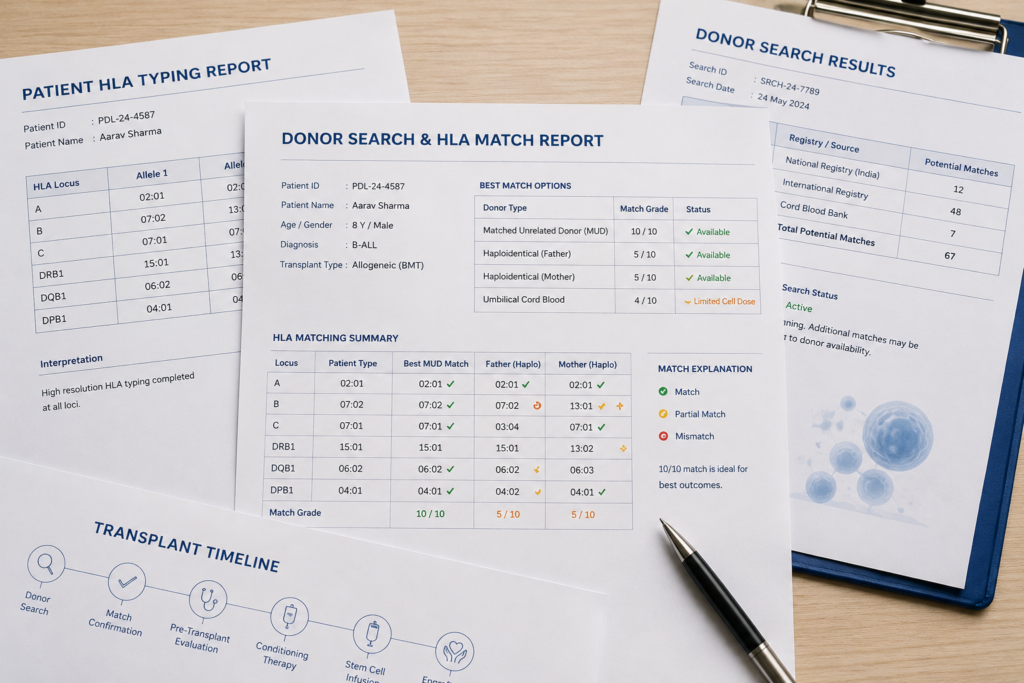
When doctors recommend a bone marrow transplant for a child, many parents immediately ask:
“What happens if my child has no matching sibling donor?”
This is one of the most common concerns in pediatric bone marrow transplant treatment. The good news is that a child can still undergo a successful stem cell transplant even if no sibling donor is available.
Today, doctors can use:
- matched unrelated donor (MUD) transplant,
- haploidentical bone marrow transplant,
- cord blood transplant,
- and international donor registries
to find alternative donor options for children with leukaemia, thalassemia, aplastic anaemia, and other blood disorders.
Advances in HLA matching, donor search technology, and pediatric transplant care have significantly improved transplant success rates in children without sibling donors.
Why Might a Child Need a Bone Marrow Transplant?
A bone marrow transplant (BMT), also called a stem cell transplant, replaces damaged bone marrow with healthy blood-forming stem cells.
Pediatric bone marrow transplant may be recommended for:
- Acute Lymphoblastic Leukaemia (ALL)
- Acute Myeloid Leukaemia (AML)
- Thalassemia Major
- Severe Aplastic Anaemia
- Sickle Cell Disease
- Immune Deficiency Disorders
- Relapsed Blood Cancers
- Certain Genetic Blood Disorders
For many children, a stem cell transplant offers the best chance for long-term disease control or cure.
Can a Child Undergo a Bone Marrow Transplant Without a Sibling Donor?
Yes. Many children successfully undergo bone marrow transplant without a fully matched sibling donor.
Only a limited number of patients have a perfectly matched brother or sister available for donation. If no sibling donor is found, doctors may consider:
- Matched Unrelated Donor (MUD) transplant
- Haploidentical transplant
- Cord blood transplant
- Alternative donor transplant options
This is why parents often search:
- No donor for bone marrow transplant
- No sibling donor for leukaemia transplant
- Can an unrelated donor transplant work
- Alternative donor transplant in children
Modern pediatric transplant programs are designed to manage these situations effectively.
What Is a Matched Unrelated Donor (MUD) Transplant?
A Matched Unrelated Donor transplant is a type of allogeneic stem cell transplant where stem cells come from a donor who is not biologically related to the child but has closely matching HLA tissue markers.
Doctors search for donors through:
- Indian stem cell donor registries
- International marrow donor databases
- Worldwide donor programs
- Cord blood banks
The goal is to identify a donor whose immune system markers closely match the child’s.
MUD transplant is commonly used in:
- pediatric leukemia
- thalassemia major
- aplastic anemia
- and relapsed blood cancers
How Does Donor Matching Work in Bone Marrow Transplant?
Before a transplant, doctors perform a process called HLA typing or donor matching.
What Is HLA Matching?
Human Leukocyte Antigens (HLA) are proteins found on white blood cells and body tissues. These markers help the immune system recognise which cells belong to the body.
A closer HLA match may:
- reduce rejection risk,
- lower the chances of graft-versus-host disease (GVHD),
- and improve transplant outcomes.
Doctors usually aim for:
- 10/10 HLA match
- Strong donor compatibility
- Healthy donor stem cells
This section helps answer searches such as:
- donor matching for bone marrow transplant
- HLA matching for BMT
- stem cell donor compatibility
- donor search for a leukaemia child
Structured, question-focused medical content with clear answers performs better for AI-driven search systems and AI Overviews.
What Happens If No Matching Donor Is Found?
If a fully matched donor is not available immediately, doctors may explore:
- haploidentical transplant,
- partially matched family donor transplant,
- or cord blood transplant.
In many cases, parents or close relatives can serve as suitable donors through haploidentical bone marrow transplantation.
Modern transplant protocols have improved outcomes even with partial donor matches.
What Is Haploidentical Bone Marrow Transplant?
A haploidentical transplant uses stem cells from a partially matched donor, usually:
- A parent
- Sibling
- A close family member
This option is particularly useful when:
- No fully matched donor is available
- The transplant is urgent
- The donor registry search is taking time
Haploidentical transplant has become an important alternative donor option in pediatric BMT.
How Do Doctors Find an Unrelated Donor?
If no sibling donor is available, the transplant team starts a donor registry search.
Millions of volunteer stem cell donors are registered globally. Doctors compare donor HLA profiles with the child’s tissue markers to identify suitable matches.
Doctors Evaluate:
- HLA compatibility
- Donor age
- Donor health
- Stem cell availability
- Infection screening
Children from India, Bangladesh, Africa, and the Middle East often travel to specialised pediatric bone marrow transplant centres in Delhi for advanced donor transplant evaluation and pediatric hemato-oncology care.
This section helps capture searches like:
- How to find donor for a leukaemia child
- donor registry for bone marrow transplant
- unrelated donor transplant child
- donor search for stem cell transplant
Is Unrelated Donor Bone Marrow Transplant Safe in Children?
Modern pediatric MUD transplant outcomes have improved significantly because of:
- advanced donor matching,
- better infection control,
- specialised pediatric transplant units,
- and improved supportive care.
Many children with leukaemia and blood disorders successfully undergo unrelated donor transplant and gradually return to normal activities after recovery.
However, like all stem cell transplants, risks remain.
Risks and Complications of Alternative Donor Transplant
Possible complications may include:
- Graft-versus-host disease (GVHD)
- Infection
- Graft failure
- Organ toxicity
- Delayed immune recovery
- Bleeding complications
The overall risk depends on:
- donor compatibility
- disease condition
- transplant timing
- and the child’s health
How Long Does Recovery After Pediatric Bone Marrow Transplant Take?
Recovery after a pediatric stem cell transplant can take several months.
Recovery Usually Includes:
- Blood count monitoring
- Infection prevention
- Nutritional support
- Medication management
- Immune recovery
- Long-term follow-up care
Parents are usually advised to watch for:
- Fever
- Rash
- Breathing difficulty
- Weakness
- Appetite loss
- Signs of infection
Most children gradually recover as transplanted stem cells begin producing healthy blood cells again.
Why Early Donor Search Matters
For aggressive blood cancers like leukaemia, delaying transplant may affect treatment outcomes.
Doctors often begin:
- HLA typing
- Sibling testing
- Unrelated donor search after diagnosis
Early donor identification helps improve transplant planning and reduce treatment delays.
Can Bone Marrow Transplant Cure Leukaemia in Children?
In many children with high-risk or relapsed leukaemia, bone marrow transplant may offer the possibility of long-term remission or cure.
The outcome depends on:
- leukemia type
- disease stage
- donor compatibility,
- transplant timing,
- and post-transplant care.
Children treated at experienced pediatric hemato-oncology and bone marrow transplant centres often benefit from multidisciplinary transplant support and long-term follow-up care.
Final Thoughts
Not having a sibling donor does not mean a child cannot receive a successful bone marrow transplant. Advances in donor registries, HLA matching, pediatric stem cell transplant protocols, and alternative donor transplant techniques have expanded treatment possibilities for children with leukaemia, thalassemia, aplastic anaemia, and other blood disorders.
Today, treatments such as Matched Unrelated Donor (MUD) transplant and haploidentical bone marrow transplant offer new hope to families searching for life-saving treatment options when a sibling donor is unavailable.

 WhatsApp