
Normal Toddler Bruising vs Leukaemia Bruising: When to Worry
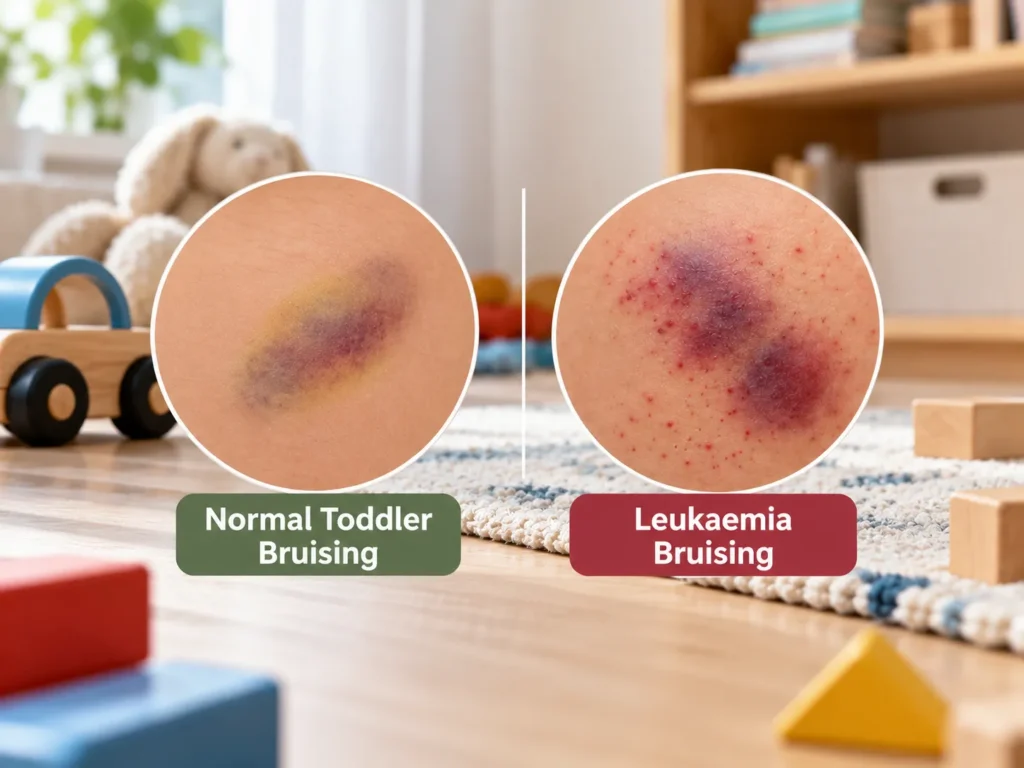
Bruises are common in toddlers. As children learn to walk, run, climb and explore, minor falls and bumps can leave temporary marks on their skin. However, when bruises appear frequently, without an obvious injury, or alongside other symptoms, parents may wonder whether something more serious could be happening.
One concern is childhood leukaemia, a cancer of the blood and bone marrow that can affect the body’s ability to produce healthy blood cells, including platelets that help blood clot.
Understanding the difference between normal toddler bruising and unusual bruising can help parents recognise when medical advice is needed. Although bruising alone does not mean a child has leukaemia, unexplained or persistent bruising should not be ignored.
What Does Normal Bruising Look Like in Toddlers?
Toddlers are naturally active and still developing their balance and coordination. They may bump into furniture, fall while playing or knock their legs against objects without parents noticing the exact incident.
Normal bruises typically:
- Appear over bony areas, such as the shins, knees, elbows and forehead.
- Have a plausible explanation, such as a fall or accidental bump.
- Change colour as the body gradually breaks down and reabsorbs the trapped blood.
- Become less noticeable over time, usually within about two weeks, although larger bruises may take longer to heal.
The number and location of bruises can vary depending on a child’s activity level and stage of development.
However, a bruise does not have to be painful or have an obvious cause to be harmless. Similarly, an unexplained bruise does not automatically indicate a serious illness. The child’s overall health, bruising pattern and medical history help determine whether further assessment is necessary.
What Does Leukaemia-Related Bruising Look Like?
Leukaemia can interfere with normal blood cell production in the bone marrow. When platelet levels fall, blood may not clot as effectively, making bruising and bleeding more likely.
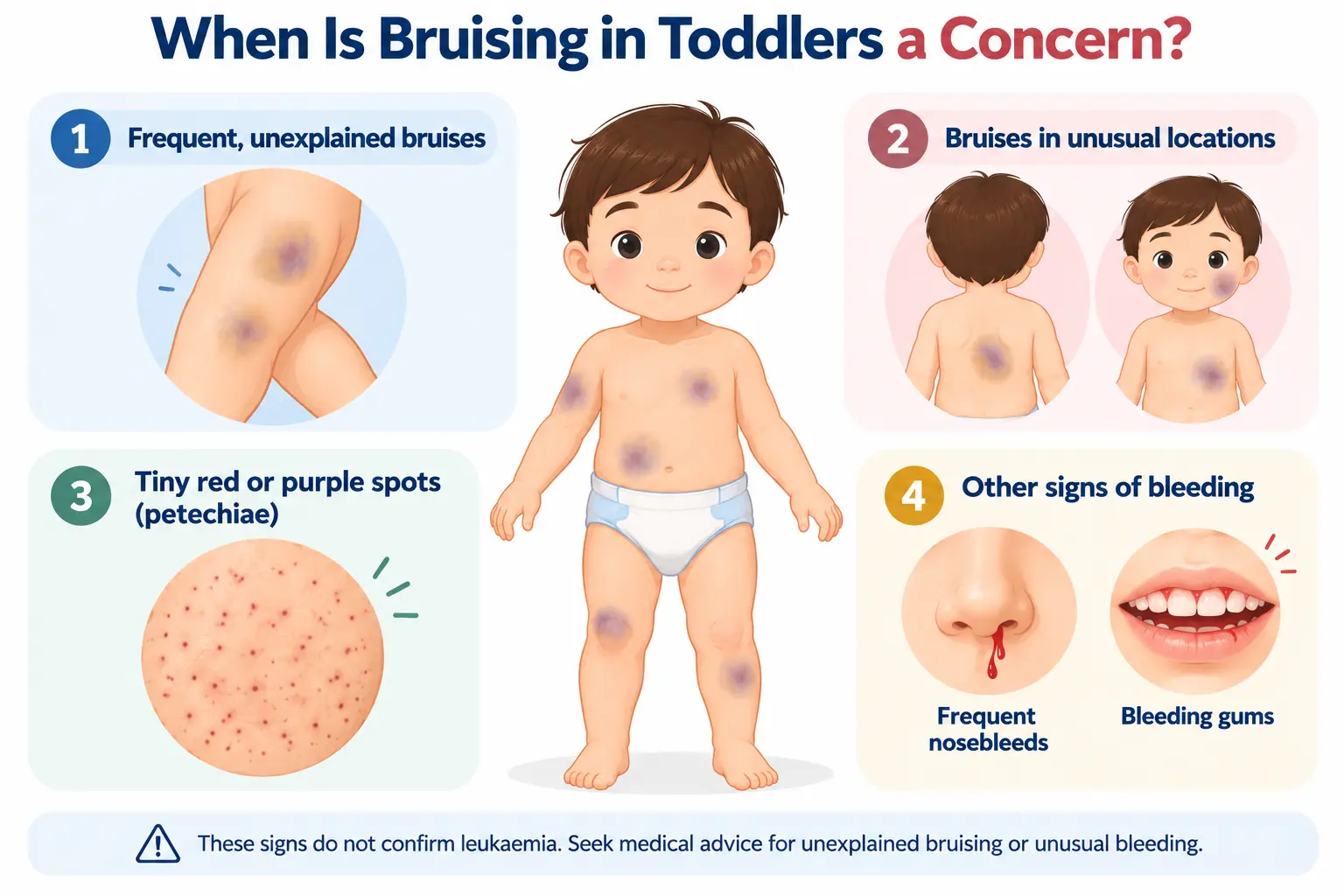
Parents may notice the following changes:
- Frequent, unexplained bruises: Bruises appear without a clear injury or seem disproportionate to minor bumps.
- Bruises in unusual locations: Marks on the trunk, back, abdomen, cheeks or upper arms deserve attention when there is no reasonable explanation, particularly in a child who is not yet independently mobile.
- Tiny red or purple spots: These may be petechiae, small spots caused by bleeding beneath the skin.
- Other signs of bleeding: Frequent nosebleeds, bleeding gums or bleeding that takes longer than expected to stop may occur alongside easy bruising.
These features are not specific to leukaemia. Other conditions, including immune thrombocytopenia (ITP), infections and clotting disorders, can also cause unusual bruising.
It is also important to remember that leukaemia-related bruising does not have one distinctive appearance. A doctor must assess the overall clinical picture rather than identify the condition from a photograph or the colour of a bruise.
Normal Toddler Bruising vs Leukaemia Bruising: Key Differences
| Feature | Bruising commonly seen in toddlers | Bruising that needs medical assessment |
|---|---|---|
| Location | Often on shins, knees, elbows or forehead | May occur in unusual areas without a clear injury |
| Cause | Usually linked to everyday bumps or falls | May appear without an identifiable cause |
| Pattern | Consistent with the child’s activities | Frequent, increasing or disproportionate to minor injuries |
| Other symptoms | Child is otherwise behaving normally | May occur with pallor, fatigue, fever or unusual bleeding |
| Healing | Usually gradually fades over time | New bruises may continue appearing |
This comparison is a guide, not a diagnostic test. Normal-looking bruises do not rule out illness, and unusual bruises do not confirm leukaemia.
When Should You Worry About Bruises on a Toddler?
Arrange a prompt medical assessment with paediatric haemato-oncologist if your toddler develops repeated unexplained bruises, numerous new bruises, unexplained pinpoint red or purple spots, or unusual bleeding.
Concern increases when bruising occurs alongside other symptoms, such as:
- Unusual tiredness, weakness or reduced activity.
- Pale-looking skin.
- Persistent or recurrent fever.
- Frequent or prolonged infections.
- Bone or joint pain that affects movement or play.
- Swollen lymph nodes or unexplained abdominal swelling.
- Reduced appetite or unexplained weight loss.
These symptoms can have many causes, including common childhood illnesses. However, when several occur together or continue to worsen, a doctor should investigate them.
Seek emergency medical care for bleeding that will not stop, significant bleeding, severe headache, unusual drowsiness or concerning symptoms following a head injury. Do not wait for additional symptoms to appear if your child seems seriously unwell.
For a broader overview, read our guide to early warning signs of childhood blood cancer.
How Is Unexplained Bruising in Toddlers Investigated?
A paediatric haemato-oncologist will ask when the bruises first appeared, whether there have been any injuries, and whether your child has experienced recent illnesses, unusual tiredness, fever or bleeding.
Depending on the findings, they may recommend a complete blood count (CBC). This blood test measures red blood cells, white blood cells and platelets. Additional tests may be needed if the results or examination suggest a blood disorder.
If leukaemia is suspected, further investigations and specialist assessment are required to establish the diagnosis. Bruising alone, or even an abnormal platelet count, cannot confirm that a child has leukaemia.
Learn more about normal platelet counts in children and what low levels may mean.
Final Thoughts
Most toddler bruises result from everyday bumps and falls. However, frequent or unexplained bruising, particularly when accompanied by unusual bleeding, persistent fever, fatigue or pale skin, deserves medical attention.
Leukaemia is only one of several possible causes, and parents should not assume the worst based on bruises alone. A timely medical assessment can help identify the cause and determine whether further testing is needed.
If you are concerned about your toddler’s bruising, speak with a paediatrician rather than waiting for additional symptoms to develop.

 WhatsApp