
What Are Stem Cells in Bone Marrow Transplant?
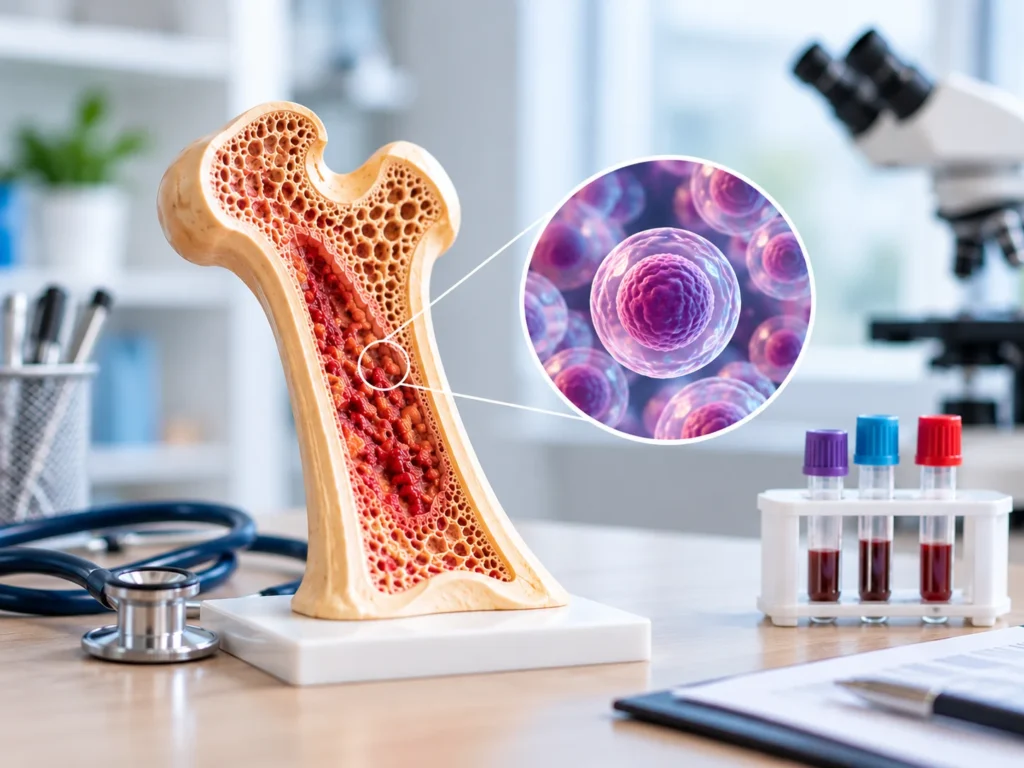
Stem cells are at the heart of a bone marrow transplant (BMT). They are special cells that can develop into different types of blood cells and help rebuild the blood-forming system after it has been damaged by disease or intensive treatment.
A bone marrow transplant, also called a hematopoietic stem cell transplant (HSCT), involves giving healthy blood-forming stem cells to a patient. These cells travel to the bone marrow, where they begin producing new blood cells. BMT may be used to treat conditions such as leukemia, lymphoma, thalassemia, aplastic anemia, sickle cell disease, and certain immune disorders.
What Are Stem Cells?
Stem cells are immature cells with the ability to develop into different types of specialised cells. In bone marrow transplantation, the focus is on hematopoietic stem cells, also known as blood-forming stem cells.
These cells can produce the three major types of blood cells:
- Red blood cells, which carry oxygen throughout the body
- White blood cells, which help fight infections
- Platelets, which help control bleeding
Normally, blood-forming stem cells are found mainly in the bone marrow. They can also be collected from the bloodstream after special medicines are given to move them from the bone marrow into the blood.
What Is the Role of Stem Cells in Bone Marrow Transplant?
The main role of stem cells in a bone marrow transplant is to restore healthy blood cell production.
Before a transplant, a patient may receive chemotherapy, radiation, or a combination of treatments called conditioning therapy. This treatment prepares the body for transplantation and may destroy diseased bone marrow or abnormal blood cells.
Healthy stem cells are then infused into the patient’s bloodstream. The process is similar to receiving an intravenous blood product and does not involve surgically placing the cells into the bones. The transplanted cells naturally travel to the bone marrow, where they begin producing new blood cells.
Where Do Stem Cells for Bone Marrow Transplant Come From?
Stem cells used for transplantation can come from the patient or from a donor, depending on the type of transplant.
- Autologous Stem Cell Transplant
In an autologous transplant, the patient’s own healthy stem cells are collected before intensive treatment. They are stored and later infused back into the patient after high-dose chemotherapy.
This approach is commonly used for selected conditions such as multiple myeloma and certain types of lymphoma.
- Allogeneic Stem Cell Transplant
In an allogeneic transplant, stem cells come from another person, such as a matched sibling, another family member, or an unrelated donor.
The donor undergoes testing to determine compatibility with the patient. HLA typing is an important part of this process because the closer the match, the more suitable the donor may be for transplantation.
- Haploidentical Stem Cell Transplant
Sometimes a fully matched donor cannot be found. A haploidentical transplant uses a partially matched family donor, often a parent, child, or sibling. Advances in transplant techniques have made this an important option for patients who do not have a fully matched donor.
How Are Stem Cells Collected for a Bone Marrow Transplant?
Stem cells can be collected in different ways depending on the donor source and transplant plan.
One common method is peripheral blood stem cell collection. Medicines are given to encourage blood-forming stem cells to move from the bone marrow into the bloodstream. The blood is then passed through an apheresis machine, which separates the stem cells and returns the remaining blood components to the patient or donor.
In some situations, stem cells may be collected directly from the bone marrow under medical supervision.
The collected cells are then prepared for transplantation. For an autologous transplant, the patient’s stem cells may be frozen and stored until they are needed.
What Happens After Stem Cell Infusion?
After the stem cells are infused, they gradually travel to the bone marrow. There, they begin the process of producing new blood cells.
This process is known as engraftment.
During this period, blood counts may remain low, so patients require close monitoring and supportive care. Doctors monitor blood counts, infections, organ function, and other potential complications.
As engraftment progresses, the transplanted stem cells begin producing increasing numbers of healthy blood cells.
What Is Stem Cell Engraftment?
Stem cell engraftment refers to the stage when transplanted stem cells successfully settle in the bone marrow and begin producing new blood cells.
It is an important milestone after bone marrow transplantation. Doctors regularly monitor blood counts to determine whether the transplanted cells are beginning to function.
The time required for engraftment can vary depending on factors such as the type of transplant, stem cell source, patient’s condition, and treatment protocol.
Which Conditions Can Be Treated With Stem Cell Transplant?
A stem cell transplant may be considered for selected patients with serious blood, bone marrow, immune, or genetic disorders.
These may include:
- Leukemia
- Lymphoma
- Thalassemia major
- Aplastic anemia
- Sickle cell disease
- Bone marrow failure syndromes
- Certain immune deficiency disorders
- Selected inherited metabolic conditions
Whether transplantation is appropriate depends on the specific diagnosis, disease status, overall health, donor availability, and other clinical factors.
Are Stem Cells the Same as Bone Marrow?
No. Stem cells and bone marrow are not the same thing.
Bone marrow is the soft tissue inside certain bones where blood-forming stem cells and other cells are found. Stem cells are the blood-forming cells that can produce new red blood cells, white blood cells, and platelets.
In a bone marrow transplant, the goal is not simply to replace the physical bone marrow. Instead, healthy blood-forming stem cells are introduced so that they can establish themselves in the bone marrow and restore blood cell production.
Key Takeawys
Stem cells are the foundation of a bone marrow transplant. These blood-forming cells help rebuild the body’s ability to produce healthy red blood cells, white blood cells, and platelets after the patient’s bone marrow has been damaged or replaced as part of treatment.
Depending on the condition, stem cells may come from the patient or a donor. After infusion, they travel to the bone marrow and begin producing new blood cells through a process called engraftment.
Since every transplant is different, the choice of transplant type, donor, conditioning treatment, and stem cell source should be determined after a detailed medical evaluation.

 WhatsApp