
Autologous Bone Marrow Transplant in Delhi
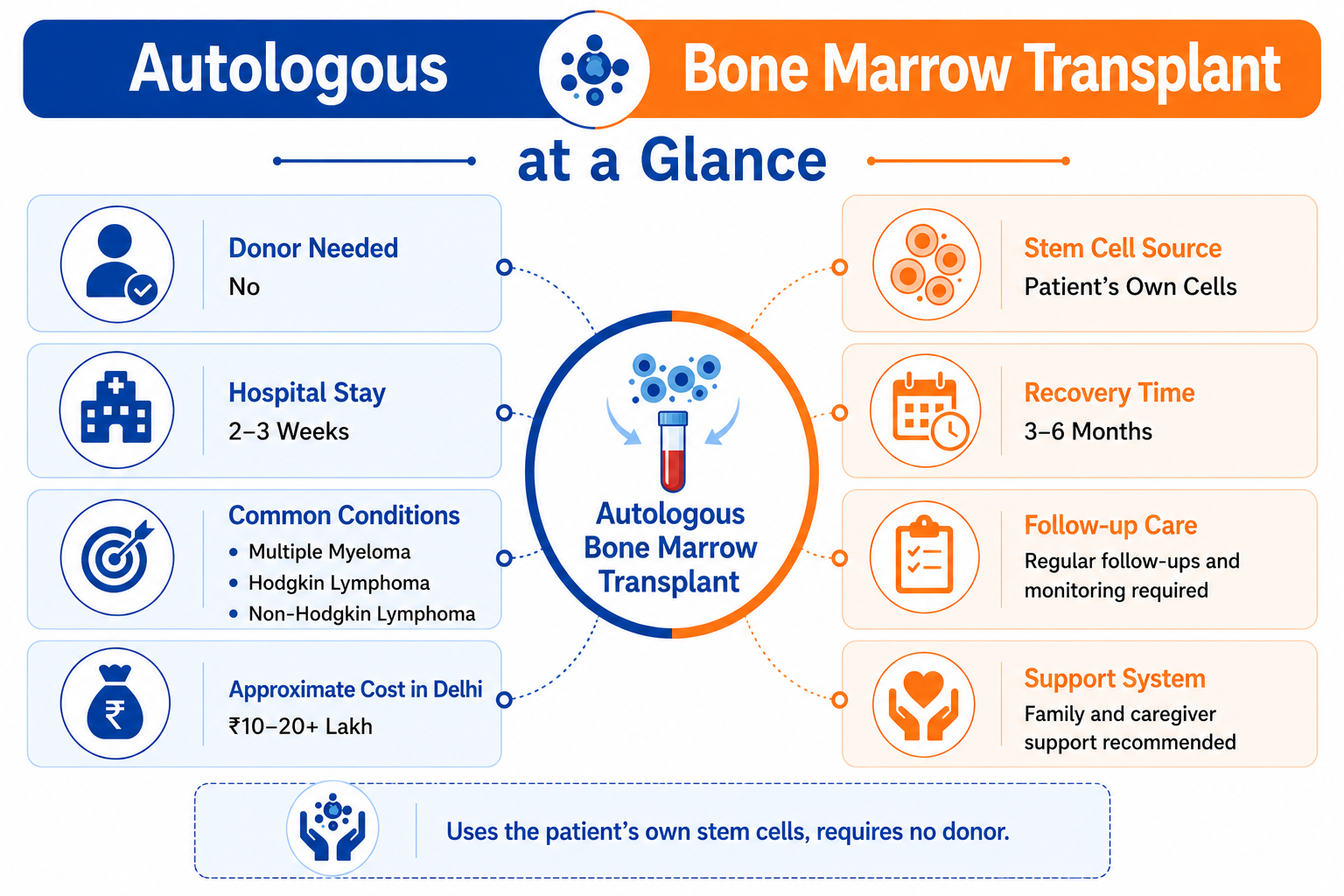
Autologous Bone Marrow Transplant (ABMT), also known as Autologous Stem Cell Transplant (ASCT), is a procedure in which a patient’s own stem cells are collected, stored, and reinfused after high-dose chemotherapy. It is commonly used for conditions such as multiple myeloma, Hodgkin lymphoma, and Non-Hodgkin lymphoma.
Reach Out for Expert Care
What Is an Autologous Bone Marrow Transplant?
Autologous Bone Marrow Transplant is a specialised treatment that allows doctors to safely administer high-dose chemotherapy while protecting the patient’s bone marrow.
Before chemotherapy begins, healthy stem cells are collected from the patient and stored. After chemotherapy destroys cancer cells, the stored stem cells are infused back into the bloodstream to rebuild healthy blood and immune cells.
In simple terms, the process of autologous BMT can be understood in three stages:
- Collect healthy stem cells
- Administer high-dose chemotherapy
- Reinfuse stem cells to restore bone marrow function
Autologous BMT acts as a rescue treatment that helps the bone marrow recover after intensive chemotherapy.
Who Needs an Autologous Stem Cell Transplant?
Autologous stem cell transplant is recommended for certain cancers where the bone marrow itself remains healthy, but high-dose chemotherapy is needed to improve treatment outcomes.
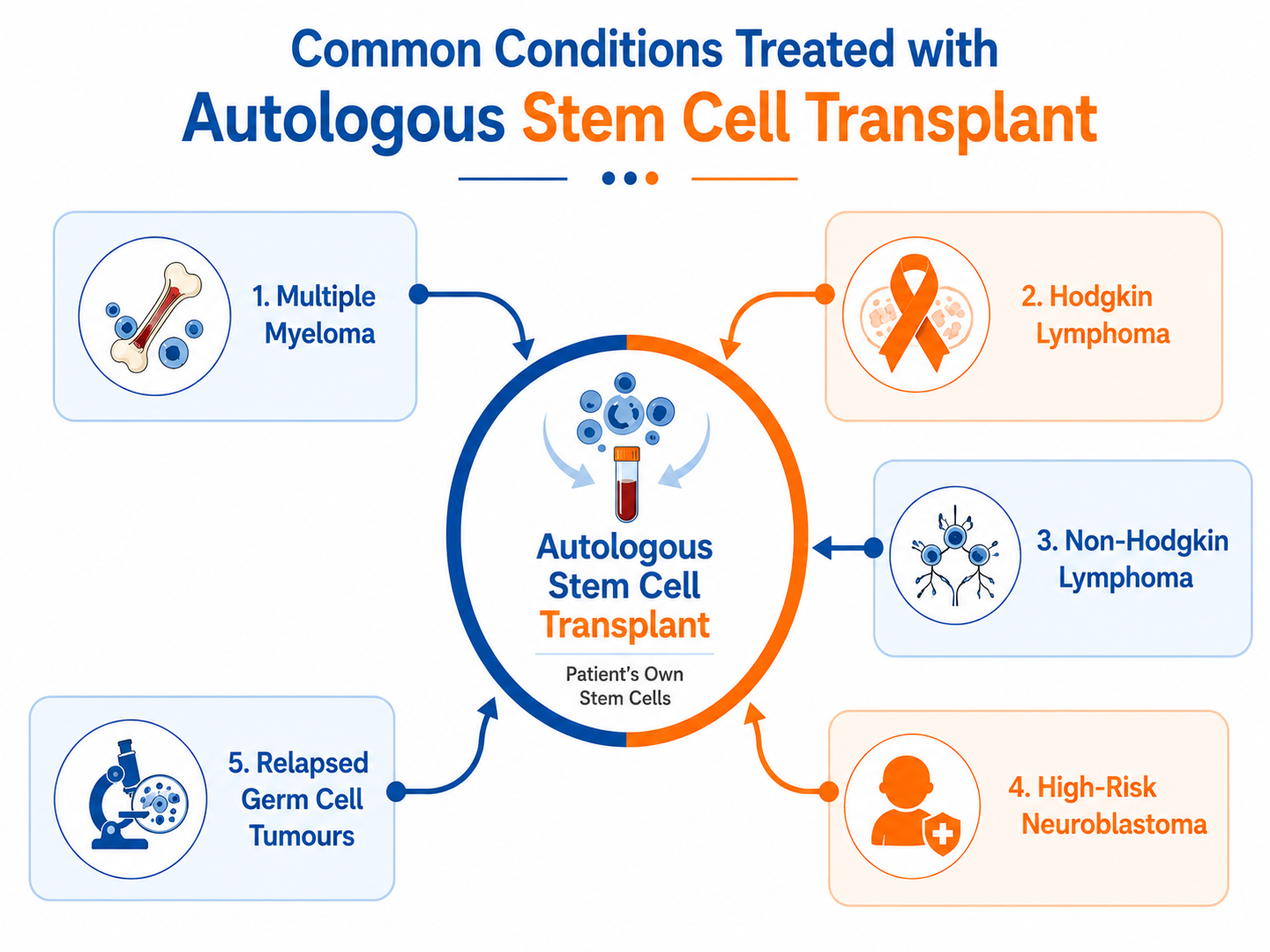
Common Conditions for which autologous BMT is performed include:
- Multiple Myeloma
Multiple myeloma is the most common indication for autologous transplant worldwide. The procedure helps achieve deeper remission and improves long-term disease control.
- Hodgkin Lymphoma
Patients with relapsed or refractory Hodgkin lymphoma may benefit from autologous transplant following successful salvage chemotherapy.
- Non-Hodgkin Lymphoma
Aggressive or relapsed Non-Hodgkin lymphoma that responds to second-line treatment may be consolidated with an autologous transplant.
- High-Risk Neuroblastoma
In children with high-risk neuroblastoma, autologous transplant forms an important part of standard treatment protocols.
- Relapsed Germ Cell Tumours
Selected patients with relapsed germ cell tumours may undergo high-dose chemotherapy followed by autologous stem cell rescue.
Autologous BMT is generally used when stronger chemotherapy is required but the patient’s own stem cells remain healthy enough to be reused.
Autologous vs Allogeneic Bone Marrow Transplant
Patients often ask how autologous transplant differs from donor-based transplantation.
| Feature | Autologous BMT | Allogeneic BMT |
| Stem Cell Source | Own Cells | Donor Cells |
| Donor Required | No | Yes |
| HLA Matching | Not Required | Required |
| GVHD Risk | very rare | Present |
| Recovery | Faster | Longer |
| Common Use | Myeloma, Lymphoma | Leukemia, Thalassemia, Aplastic Anaemia |
While autologous transplant generally carries fewer complications, allogeneic transplant offers a beneficial graft-versus-cancer effect that may be important in certain diseases.
Autologous Bone Marrow Transplant Procedure
The autologous transplant process usually takes several weeks and involves six important stages.
Step 1: Pre-Transplant Evaluation
Before transplantation, doctors assess whether the patient is fit enough to tolerate high-dose chemotherapy.
Common investigations include:
- Blood tests
- Bone marrow examination
- PET-CT scan (when required)
- Heart function assessment
- Lung function testing
- Kidney and liver evaluation
This evaluation helps identify potential risks and ensures the safest possible treatment plan.
Step 2: Stem Cell Mobilisation
Normally, stem cells remain inside the bone marrow. To collect them, doctors first encourage these cells to move into the bloodstream.
Step 3: Stem Cell Collection (Apheresis)
Once sufficient stem cells are circulating in the blood, they are collected through a process known as apheresis.
During apheresis:
- Blood is withdrawn through a central line
- A machine separates stem cells
- Remaining blood is returned to the body
- The procedure usually lasts 4-6 hours
Most patients require one or two collection sessions. The stem cells are then frozen and safely stored until transplant day.
Step 4: High-Dose Chemotherapy
This is the most intensive phase of treatment. High-dose chemotherapy is administered to destroy as many remaining cancer cells as possible.
Step 5: Stem Cell Infusion
Following chemotherapy, the frozen stem cells are thawed and infused through a central venous catheter. The infusion does not require surgery and usually takes a few hours.
The infused stem cells naturally travel to the bone marrow and begin rebuilding blood production.
Step 6: Engraftment and Recovery
Engraftment occurs when transplanted stem cells begin producing healthy blood cells.
Most patients experience:
- White blood cell recovery within 10–14 days
- Platelet recovery shortly afterwards
- Gradual improvement in immune function
Patients remain under close observation until blood counts reach safe levels.
Recovery After Autologous Bone Marrow Transplant
Recovery continues well beyond hospital discharge and occurs in stages.
During Hospital Stay
Patients commonly experience:
- Fatigue
- Mouth ulcers (mucositis)
- Nausea
- Reduced appetite
- Low blood counts
- Increased infection risk
These side effects are primarily caused by chemotherapy rather than the stem cell infusion itself.
After Discharge
First Month
- Weekly follow-up visits
- Blood count monitoring
- Infection precautions
Months 2-3
- Energy levels gradually improve
- Appetite returns
- Physical activity increases
Months 3-6
- Most patients resume normal daily activities
- Many return to work or school
Months 6-12
- Continued immune system recovery
- Vaccination schedules may begin
Recovery is gradual, but most patients notice significant improvement within the first few months after transplant.
Autologous Bone Marrow Transplant Success Rate
Success rates depend on several factors, including diagnosis, disease stage, response to treatment, and overall health.
Multiple Myeloma Outcomes
Indian multicentre data has reported:
- 77% complete remission or better
- 91% one-year survival
- 85% two-year survival
- 72% five-year survival
Risks and Complications of Autologous Bone Marrow Transplant
Although autologous BMT is generally safer than donor transplants, complications can still occur.
Potential risks include:
- Serious infections
- Bleeding due to low platelet counts
- Mouth ulcers and mucositis
- Nausea and vomiting
- Organ toxicity from chemotherapy
- Delayed engraftment
- Disease relapse
Close monitoring by an experienced transplant team helps minimise these risks and ensures timely treatment if complications occur.
Autologous Bone Marrow Transplant Cost in Delhi
One of the most common questions patients ask is about the cost of autologous stem cell transplant in Delhi.
The approximate average cost of Autologous Bone Marrow Transplant in Delhi ranges from ₹10 lakh to ₹20 lakh or more.
What Affects the Cost of autologous bmt?
The final cost depends on several factors:
- Diagnosis
- Chemotherapy regimen
- Length of hospital stay
- ICU requirement
- Blood product support
- Infection management
- Medicines and supportive care
Patients should discuss a personalised estimate with their transplant team before treatment.
Why Trust Dr. Satyendra Katewa for Autologous Bone Marrow Transplant in Delhi?
Choosing an experienced transplant specialist is one of the most important decisions during the BMT transplant journey.
Dr. Satyendra Katewa is among the leading Bone Marrow Transplant and Pediatric Hemato-Oncology specialists in Delhi. With more than 25 years of experience, he has dedicated his career to treating blood cancers, blood disorders, and performing complex bone marrow transplant procedures.
His areas of expertise include:
- Autologous Bone Marrow Transplant
- Allogeneic Bone Marrow Transplant
- Haploidentical Bone Marrow Transplant
- Multiple Myeloma
- Hodgkin Lymphoma
- Non-Hodgkin Lymphoma
- Thalassemia
- Aplastic Anaemia
- Paediatric blood cancers
Patients from Delhi, NCR, and across India consult Dr. Katewa for advanced transplant care, personalised treatment planning, and long-term follow-up.
Final Words
Autologous Bone Marrow Transplant is an established treatment option for multiple myeloma, relapsed Hodgkin lymphoma, Non-Hodgkin lymphoma, and selected high-risk cancers. By using the patient’s own stem cells, the procedure allows doctors to safely administer high-dose chemotherapy while avoiding donor-related complications.
If you are considering a bone marrow transplant and are looking for an experienced BMT specialist in Delhi, consulting a doctor with dedicated expertise in stem cell transplantation can help you make informed treatment decisions. Dr. Satyendra Katewa is among the leading Bone Marrow Transplant specialists in Delhi and provides comprehensive transplant evaluation, personalised treatment planning, and long-term follow-up care at Max Super Speciality Hospital, Patparganj.

Dr. Satyendra Katewa's Medical Content Team
Dr. Satyendra Katewa’s medical content team specialises in developing accurate, evidence-based, and patient-focused healthcare content. With strong clinical insight and expertise in medical writing and SEO, the team simplifies complex haematology and oncology information into clear, trustworthy resources that support informed decision-making and reflect Dr. Katewa’s commitment to ethical, compassionate care.
This content is reviewed by Dr. Satyendra Katewa
Related Treatments

Paediatric Bone Marrow Transplant in Delhi
A paediatric bone marrow transplant in Delhi is an advanced procedure for managing several complex blood and immune system disorders…
Bone Marrow Transplant for Thalassemia Major in Delhi
For a child with thalassemia major, regular blood transfusions can become a part of everyday life. While transfusions and iron…
Stem Cell Transplant in Delhi
Stem cell transplant is a specialised procedure that replaces diseased or damaged bone marrow with healthy blood-forming stem cells. These…
Haploidentical BMT in Delhi
If your child or family member needs a bone marrow transplant but no fully matched donor has been found, a haploidentical…
Bone Marrow Transplant in Delhi
Diseased bone marrow is replaced with healthy stem cells to restore normal blood formation in conditions like AML, ALL, JMML,…
Bone Marrow Transplant (BMT) in Delhi for International Patients
Explore bone marrow transplant options in Delhi for international patients, including a clear treatment process, donor matching, cost considerations, and…
Related Blogs
Low Platelet Count: Causes, Symptoms & What Level Is Dangerous
A low platelet count, medically called thrombocytopenia, means fewer than 150,000 platelets per microlitre (µL)…
Read Article →
Normal Platelet Count in Children: Range, Low Levels and When to Worry
A blood test can raise questions when your child’s platelet count falls outside the normal…
Read Article →
What Are Stem Cells in Bone Marrow Transplant?
Stem cells are at the heart of a bone marrow transplant (BMT). They are special…
Read Article →
How to Get Financial Help for a Child’s Cancer Treatment in India
When a child is diagnosed with cancer, parents have to think about much more than…
Read Article →
Sickle Cell Disease vs Thalassaemia: Differences & Treatment Options in Delhi NCR
Sickle cell disease and thalassaemia are both inherited blood disorders that affect haemoglobin, the protein in…
Read Article →
Life After Pediatric Bone Marrow Transplant: A Parent’s Complete Guide
Quick Summary Recovery takes months – The first 100 days at home are the most…
Read Article → WhatsApp