
Haemophilia Treatment in Delhi
Haemophilia treatment in Delhi focuses on accurate diagnosis, clotting factor replacement therapy, emergency bleeding control, and long-term preventive management under the care of a specialised haematologist. Haemophilia is a genetic bleeding disorder in which the blood fails to clot properly due to a deficiency of clotting factors, leading to prolonged bleeding, spontaneous joint bleeds, muscle haemorrhage, and internal bleeding complications.
Early consultation with a haemophilia specialist in Delhi ensures structured evaluation, personalised factor therapy planning, prevention of joint damage, and improved quality of life for both children and adults living with bleeding disorders.
If you are searching for the best haemophilia doctor in Delhi or you are searching for a hemophilia treatment center in Delhi, it is important to know that consistent factor therapy under a specialist significantly reduces joint damage and emergency hospital visits.
Reach Out for Expert Care
What Is Haemophilia?
Haemophilia is a genetic bleeding disorder caused by a deficiency of clotting factor VIII or IX, which prevents blood from clotting normally.
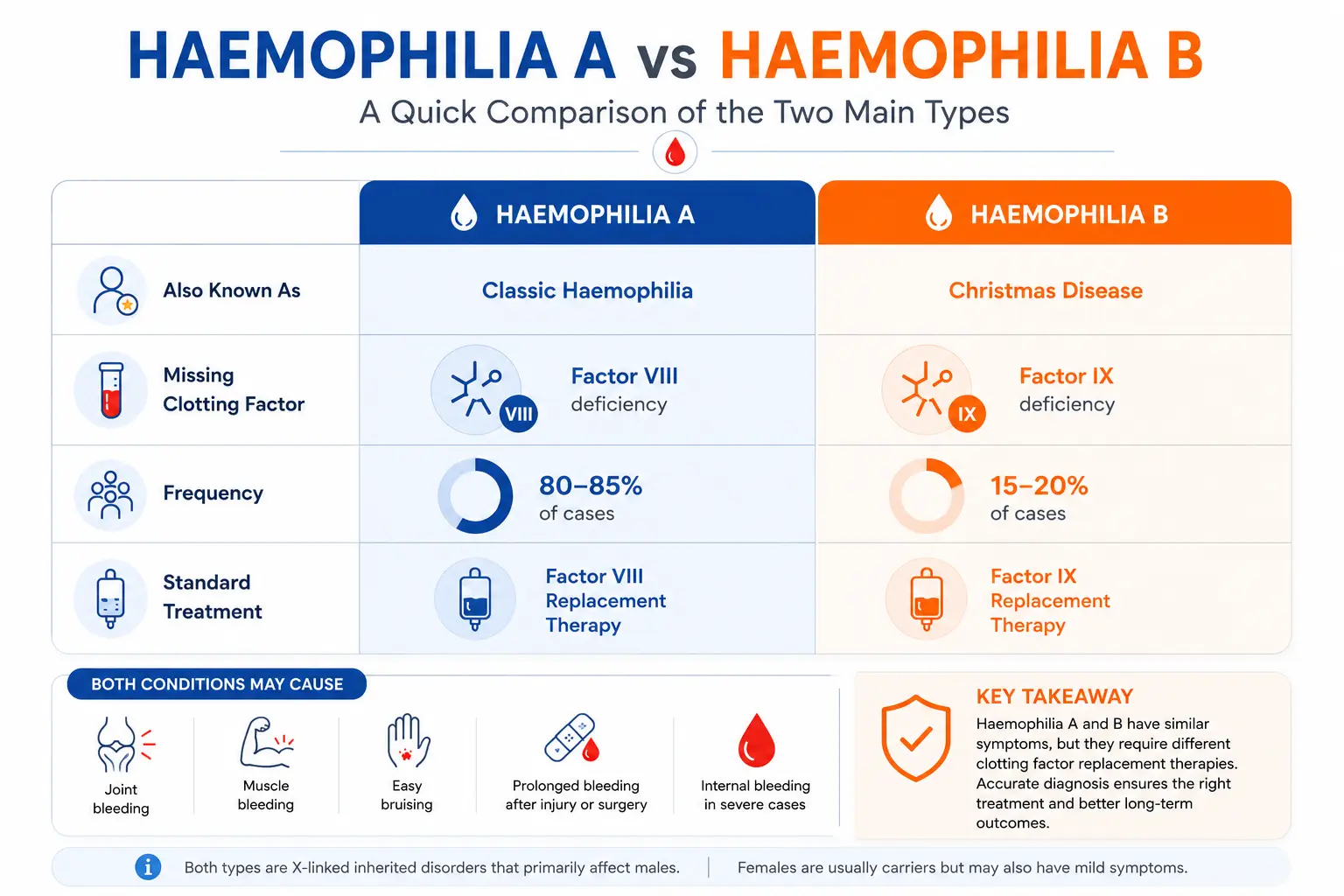
Haemophilia is an inherited clotting disorder caused by a deficiency of specific clotting factors:
- Haemophilia A: Factor VIII deficiency
- Haemophilia B: Factor IX deficiency
Because clotting factors are essential for stopping bleeding, patients may experience:
- Prolonged bleeding after cuts or surgery
- Frequent nosebleeds
- Easy bruising
- Recurrent joint swelling (knees, elbows, ankles)
- Muscle bleeding
- Internal bleeding in severe cases
Without appropriate haemophilia treatment in Delhi, repeated joint bleeds can lead to chronic arthritis, reduced mobility, and permanent joint damage.
Types and Severity of Haemophilia
Haemophilia severity is classified as mild, moderate, or severe based on the percentage of clotting factor present in the blood, which determines how often bleeding episodes occur.
Haemophilia is classified based on clotting factor levels:
Mild Haemophilia
- Bleeding mainly after injury or surgery
- Often diagnosed later in life
Moderate Haemophilia
- Occasional spontaneous bleeding
- Bleeding after minor trauma
Severe Haemophilia
- Frequent spontaneous joint and muscle bleeds
- High risk of internal bleeding
Understanding severity helps plan personalised haemophilia management in Delhi.
When Should You Consult a Haemophilia Specialist in Delhi?
Consult a bleeding disorder specialist in Delhi if you notice:
- Bleeding lasting longer than 10–15 minutes
- Recurrent joint pain and swelling
- Excessive bleeding after dental procedures
- Family history of haemophilia
- Unexplained bruising in infants or children
- Bleeding after vaccinations
Early intervention prevents long-term joint damage and reduces the risk of life-threatening haemorrhage.
Emergency Signs of Bleeding in Haemophilia
Seek emergency care immediately if bleeding does not stop with pressure within 10 to 15 minutes, or if any of the signs below appear.
Recognising these signs early can prevent life-threatening complications.
- Bleeding into a joint: sudden swelling, warmth, tightness, or pain in the knee, elbow, or ankle
- Head injury with headache, vomiting, drowsiness, or confusion (possible intracranial bleed)
- Severe abdominal or chest pain with or without visible injury
- Blood in urine or stool
- Large, rapidly spreading bruises or swelling in soft tissue
- Difficulty breathing or swallowing (possible throat or neck bleed)
- Prolonged bleeding after a fall, dental procedure, or minor surgery
- Numbness, tingling, or weakness in a limb (possible nerve compression from a bleed)
Comprehensive Diagnostic Evaluation for Haemophilia in Delhi
Diagnosing haemophilia requires blood clotting tests, including PT, aPTT, and a clotting factor assay, to confirm the type and severity of the disorder.
Accurate diagnosis of haemophilia in Delhi requires structured laboratory testing:
- Complete Blood Count (CBC)
- Prothrombin Time (PT)
- Activated Partial Thromboplastin Time (aPTT)
- Clotting Factor Assay (Factor VIII and Factor IX levels)
- Inhibitor Screening
- Genetic Testing for Haemophilia
- Family Screening (when indicated)
Precise factor-level testing determines severity and guides planning for factor replacement therapy.
Advanced Haemophilia Treatment Options in Delhi
The main treatment for haemophilia is clotting factor replacement therapy, given either on-demand during a bleed or as regular prophylactic infusions to prevent bleeding.
1. Clotting Factor Replacement Therapy in Delhi
Read More – Factor Replacement Therapy
The primary haemophilia treatment involves the infusion of the missing clotting factor:
- Factor VIII Replacement Therapy (Haemophilia A)
- Factor IX Replacement Therapy (Haemophilia B)
Treatment approaches include:
- On-demand therapy (during bleeding episodes)
- Prophylactic therapy (regular preventive infusions)
Preventive factor therapy significantly reduces spontaneous bleeding and protects joints from long-term damage.
2. Prophylactic Haemophilia Management
Preventive therapy is considered the gold standard for severe haemophilia treatment in Delhi.
Benefits include:
- Reduced frequency of joint bleeds
- Lower risk of haemophilic arthropathy
- Improved mobility and school attendance in children
- Fewer emergency hospital visits
Regular monitoring ensures optimal dosing and safety.
3. Management of Acute Bleeding Episodes
Emergency haemophilia care includes:
- Immediate clotting factor infusion
- Pain management
- Joint immobilisation
- Monitoring for internal bleeding
- Hospitalisation if required
Timely intervention prevents complications such as compartment syndrome and joint deformity.
4. Haemophilia Home Care: Daily Management Tips
Consistent home care reduces bleeding episodes and protects joint health between clinic visits.
Day-to-day management is as important as clinical treatment in preventing complications.
Daily precautions
- Store clotting factor concentrate as per manufacturer instructions, usually refrigerated
- Keep an emergency infusion kit accessible at home and while travelling
- Maintain a bleed diary noting date, site, severity, and factor dose used
- Schedule regular physiotherapy to preserve joint mobility and muscle strength
- Choose low-impact activities such as swimming or walking over contact sports
For children with haemophilia
- Inform schools and caregivers about the condition and emergency steps
- Use protective padding for active toddlers learning to walk
- Avoid intramuscular injections where possible; discuss vaccination routes with the treating doctor
- Keep dental checkups on a proactive schedule, since dental bleeds are common
When to involve the specialist team
- Before any surgery, dental procedure, or travel
- If bleed frequency increases despite prophylaxis
- If factor therapy appears less effective, which may indicate an inhibitor
4. Inhibitor Management in Haemophilia
Some patients develop inhibitors (antibodies) against clotting factors. Advanced haemophilia care in Delhi may include:
- Bypassing agents
- Immune tolerance induction therapy
- Close haematology monitoring
Specialist-led care is essential for complex cases.
5. Multidisciplinary Haemophilia Care in Delhi
Comprehensive haemophilia management includes:
- Physiotherapy for joint preservation
- Safe exercise counselling
- Orthopaedic assessment (when needed)
- Vaccination planning
- Surgical planning with factor support
- Genetic counselling for families
This structured approach improves long-term outcomes and quality of life.
Haemophilia Treatment Cost in Delhi
The overall average cost of haemophilia treatment in Delhi typically ranges from ₹3,70,000 to ₹5,50,000, depending on severity, factor type, and whether therapy is on-demand or prophylactic.
The exact cost of haemophilia treatment in Delhi varies depending on severity and therapy requirements:
- Diagnostic Evaluation: ₹8,000 – ₹25,000
- Factor Replacement (per infusion): ₹10,000 – ₹60,000+
- Monthly Prophylactic Therapy: ₹50,000 – ₹2,00,000+
- Inhibitor Management Therapy: Cost varies based on complexity
Patients should discuss personalised treatment plans and cost estimates during specialist consultation.
Clotting Factor Availability in Delhi
Clotting factor concentrates for Haemophilia A and B are available through hospital pharmacies, government haemophilia treatment centres, and select patient assistance programmes in Delhi.
Access and affordability are common concerns for families managing this condition.
- Hospital-based access: Available on-demand and for scheduled prophylaxis at major centres including Max Healthcare, Patparganj
- Government haemophilia treatment centres: Delhi has designated government-run centres offering subsidised or free factor concentrate for registered patients 🔍
- Patient support programmes: National and state-level haemophilia societies assist with factor access and registration for eligible patients 🔍
- Emergency stock planning: Discuss a personal emergency supply plan with the treating haematologist, especially for families travelling or living outside Delhi NCR
For exact current cost of factor therapy, see our Haemophilia Treatment Cost in Delhi section above, or the Factor Replacement Therapy page for detailed dosing and delivery information.
Why Choose Dr. Satyendra Katewa for Haemophilia Treatment in Delhi?
Dr. Satyendra Katewa is a paediatric haematology specialist in Delhi with over 25 years of experience managing haemophilia, factor therapy, and complex bleeding disorders.
- Specialisation: Paediatric Haematology & Bone Marrow Transplantation & Blood cancer in children
- Qualifications: MBBS, MD (Paediatrics), DM (Paediatric Haematology-Oncology)
- Experience: 25+ years in managing haemophilia and severe blood disorders
- Hospital Affiliation: Leading the Paediatric Haemato-Oncology & BMT program as Director at Max Healthcare, Patparganj, Delhi
- Professional Memberships: IAP & ISHBT
Patients Trust Dr. Katewa for:
Patients across Delhi NCR trust Dr. Satyendra Katewa for structured haemophilia treatment in Delhi, backed by 25+ years of paediatric haematology experience.
- Structured haemophilia management protocols
- Expertise in factor VIII and IX therapy
- Emergency bleeding care planning
- Long-term joint protection strategies
- Evidence-based, personalised treatment plans
His approach focuses on preventing bleeding complications, protecting joint health, and enabling patients to lead active and safe lives.
What Happens If Haemophilia Is Not Treated?
Without proper haemophilia treatment:
- Repeated joint bleeding may cause permanent arthritis
- Muscle bleeds may lead to nerve compression
- Internal bleeding may become life-threatening
- Chronic pain and mobility issues may develop
Early and structured haemophilia care in Delhi prevents irreversible complications.
Final Thoughts
Haemophilia is a lifelong condition, but with modern factor replacement therapy and specialist care in Delhi, patients can live healthy and productive lives.
If you are looking for expert haemophilia treatment in Delhi, schedule a consultation with Dr. Satyendra Katewa for a comprehensive evaluation and personalised management.
Schedule a personalised haemophilia consultation with Dr. Satyendra Katewa and receive a structured bleeding management plan.
Medical Disclaimer: This content is for informational purposes only and does not replace professional medical consultation. Please consult a qualified haematologist for a personalised diagnosis and treatment.
Frequently Asked Questions
What is haemophilia disease? or Haemophilia kya hai? expand_more
Haemophilia is a genetic bleeding disorder in which the blood does not clot properly due to a deficiency of clotting factor VIII or IX.
Haemophilia ek genetic bleeding disorder hai, jisme khoon theek se clot nahi karta kyunki clotting factor VIII ya IX ki kami hoti hai. Isse chot lagne par bleeding zyada der tak chalti hai.
Why is haemophilia more common in males? expand_more
Haemophilia is more common in males because the faulty gene is located on the X chromosome, and males have only one X chromosome to carry it. Females with one affected X chromosome are usually carriers rather than affected patients, since their second X chromosome typically compensates.
Is clotting factor available in Delhi hospitals? expand_more
Yes. Clotting factor concentrate for Haemophilia A and B is available through hospital pharmacies and haemophilia treatment centres in Delhi, both for scheduled prophylaxis and emergency use.
How quickly should a haemophilia bleed be treated? expand_more
Clotting factor should be administered as soon as a bleed is suspected, ideally within the first hour, to limit joint damage and reduce complication risk.
What are the first signs of internal bleeding in haemophilia? expand_more
Joint swelling and pain, unexplained bruising, blood in urine or stool, and severe headache after injury are early signs of internal bleeding in haemophilia patients.
Is haemophilia sex linked? expand_more
Yes, haemophilia is an X-linked genetic condition. It is passed from parent to child through the X chromosome, which is why the condition affects males far more often than females.
Is haemophilia a genetic disease? expand_more
Yes, haemophilia is a genetic disease. It is caused by a mutation in the gene responsible for producing clotting factor VIII or IX.
What is the meaning of haemophilia? expand_more
Haemophilia means a lifelong bleeding disorder where blood lacks sufficient clotting factor, causing prolonged bleeding after injury and, in some cases, spontaneous bleeding into joints and muscles.

Dr. Satyendra Katewa's Medical Content Team
Dr. Satyendra Katewa’s medical content team specialises in developing accurate, evidence-based, and patient-focused healthcare content. With strong clinical insight and expertise in medical writing and SEO, the team simplifies complex haematology and oncology information into clear, trustworthy resources that support informed decision-making and reflect Dr. Katewa’s commitment to ethical, compassionate care.
This content is reviewed by Dr. Satyendra Katewa
 WhatsApp