
Normal Platelet Count in Children: Range, Low Levels and When to Worry
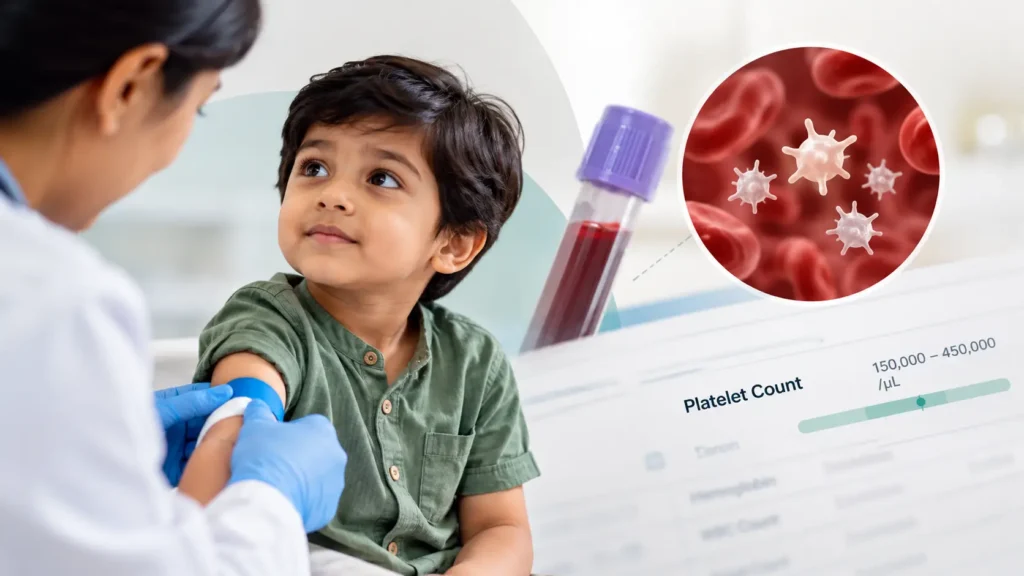
A blood test can raise questions when your child’s platelet count falls outside the normal range. Does a slightly low count mean something serious? Can it happen after a viral infection?
Understanding the normal platelet count in children can help parents make sense of blood test results without jumping to conclusions. Platelet counts need to be interpreted alongside symptoms, other blood parameters and the child’s medical history.
What Is the Normal Platelet Count in Children?
The normal platelet count in children is generally 150,000 to 450,000 platelets per microlitre (µL) of blood. (Some laboratories use a slightly different upper limit, so the reference range printed on your child’s report is important.)
Platelets, also called thrombocytes, are small blood components that help form clots and stop bleeding when a blood vessel is injured.
A complete blood count (CBC) measures the number of platelets along with red and white blood cells. Doctors use these results to investigate symptoms such as unusual bruising, frequent nosebleeds or persistent fever, and to monitor certain illnesses and treatments.
A platelet count outside the reference range does not automatically mean your child has a serious blood disorder. The result needs to be assessed in context.
What Is the Normal Platelet Count by Age?
For most children, the normal platelet count is approximately 150,000-450,000 platelets per microlitre (µL) of blood. This range generally applies from infancy through adolescence, although laboratory reference ranges may vary.
Newborns, especially premature babies or those with medical complications, may require age-specific interpretation.
Always compare the result with the reference range provided by the testing laboratory.
What Does a Low Platelet Count Mean in Children?
A platelet count below 150,000/µL is generally called thrombocytopenia. Its significance depends on how low the count is, whether it is falling and what is causing the change.
Doctors may describe low platelet counts as:
- Mild: 100,000–149,000/µL
- Moderate: 50,000–99,000/µL
- Severe: Below 50,000/µL
These categories are useful for general understanding, but clinical definitions can vary. The platelet count alone cannot reliably predict bleeding risk or determine the treatment a child needs.
Common Causes of Low Platelet Count in Children
Several conditions can lower platelet levels:
- Viral infections: Some viral infections can temporarily reduce platelet production or increase platelet destruction. Counts may recover as the child gets better, although follow-up testing may be necessary.
- Dengue: Dengue can cause platelet counts to fall during the illness. Doctors assess the child’s overall condition, hydration, warning signs and blood test trends rather than relying on a single platelet result.
- Immune thrombocytopenia (ITP): In this condition, the immune system mistakenly destroys platelets. Children may develop unexplained bruises, tiny red or purple spots on the skin, or bleeding. Read More about ITP Treatment
- Nutritional deficiencies: Certain deficiencies, including vitamin B12 or folate deficiency, can affect blood cell production. Read More – Foods that support healthy platelet production
- Bone marrow disorders: Conditions such as aplastic anaemia and leukaemia can interfere with the production of platelets and other blood cells. These causes require appropriate medical evaluation.
What Are the Symptoms of Low Platelets in Children?
Some children have no obvious symptoms, and a low count is discovered during routine testing. Others may experience:
- Easy bruising or unusually large bruises
- Tiny red or purple spots on the skin, called petechiae
- Frequent or prolonged nosebleeds
- Bleeding from the gums
- Blood in the urine or stool
- Bleeding that takes longer than expected to stop
Seek urgent medical attention for uncontrolled bleeding, blood in vomit or stool, a severe or persistent headache, unusual drowsiness, or any concerning symptoms following a head injury. If your child has dengue, follow the treating doctor’s guidance on warning signs and when to seek emergency care.
When Should Parents Be Concerned About a Low Platelet Count?
A mildly reduced platelet count in an otherwise well child may require repeat testing and observation rather than immediate treatment. However, a very low count, a rapidly falling count or any significant bleeding requires prompt medical assessment.
It is particularly important to investigate when low platelets occur alongside low haemoglobin, an abnormal white blood cell count, persistent fever, marked pallor, unexplained weight loss, enlarged lymph nodes or an enlarged liver or spleen.
Does a Low Platelet Count Mean a Child Needs a Bone Marrow Transplant?
No. Most children with low platelet counts do not automatically need a bone marrow transplant.
Treatment depends on the underlying diagnosis. Some children need monitoring, while others may require medication or treatment for an infection or nutritional deficiency.
A bone marrow transplant, also called a haematopoietic stem cell transplant, may be considered for selected conditions that affect blood cell production, including severe aplastic anaemia and certain blood cancers. The decision depends on the disease, the child’s overall health and available treatment options.
Final Thoughts
The normal platelet count in children is generally 150,000-450,000/µL, but a laboratory result tells only part of the story. The child’s symptoms, medical history and other blood test findings help determine whether the result needs monitoring or further investigation.
If your child’s platelet count is abnormal, consult a specialist rather than trying to correct the number through diet or home remedies alone. Timely assessment can help identify the cause and ensure that the child receives appropriate care.

 WhatsApp