
Thalassaemia and Pregnancy: Risks, Screening & What Parents Need to Know

If you or your partner has been told that you are a thalassaemia carrier during pregnancy, it is natural to worry about your baby’s health. But being a carrier does not mean that your baby will automatically have thalassaemia.
The baby’s risk depends on the genetic status of both parents. Thalassaemia screening during pregnancy, appropriate genetic testing and specialist counselling can help parents understand this risk and make informed decisions.
What Is Thalassaemia and Why Does It Matter During Pregnancy?
Thalassaemia is an inherited blood disorder that affects the body’s ability to produce healthy haemoglobin. Haemoglobin carries oxygen throughout the body. The condition can range from a mild carrier state to more severe forms that may require regular medical treatment.
As thalassaemia is inherited blood disorder, pregnancy can raise important questions about whether a baby may inherit the condition from their parents.
It is important to understand the difference between being a thalassaemia carrier and having thalassaemia. Most carriers are healthy and may have few or no symptoms.
Learn more about how thalassaemia is inherited →
What Does It Mean to Be a Thalassaemia Carrier During Pregnancy?
A thalassaemia carrier has a genetic change associated with thalassaemia but usually does not have the severe form of the disease.
If you are identified as a carrier during pregnancy, it does not mean that your baby has thalassaemia.
However, your partner’s carrier status may also be important. If both parents carry relevant thalassaemia variants, there can be a risk of the child inheriting a clinically important form of the condition.
This is why couples may be advised to consider thalassaemia carrier screening and genetic counselling.
What Happens If Both Parents Are Thalassaemia Carriers?
When both biological parents carry a relevant beta-thalassaemia variant, the typical inheritance pattern for each pregnancy is:
| Possible outcome | Chance |
| Child inherits beta-thalassaemia from both parents | 25% |
| Child is a carrier | 50% |
| Child inherits neither altered copy | 25% |
These figures describe the usual autosomal-recessive inheritance pattern of beta thalassaemia. The exact risk can vary depending on the specific genetic variants carried by each parent.
So, what is the risk of thalassaemia in a baby? It cannot be determined from the mother’s carrier status alone, both parents’ genetic results may need to be considered.
[Read more about thalassaemia inheritance and carrier status →]
Should Both Parents Be Tested for Thalassaemia?
If one parent is found to be a carrier, the other parent may be advised to undergo testing.
Thalassaemia screening may involve blood tests that look at red blood cell characteristics and haemoglobin patterns. In some situations, genetic testing for thalassaemia may be recommended to identify specific variants.
Testing can be particularly important when:
- One or both parents are known carriers
- There is a family history of thalassaemia
- Previous children have been diagnosed with thalassaemia
- A blood test suggests a possible haemoglobin disorder
Ideally, thalassaemia carrier screening can be considered before pregnancy. However, testing can also be carried out during pregnancy when appropriate.
How Is Thalassaemia Screening Done During Pregnancy?
The approach depends on the individual’s medical and genetic history.
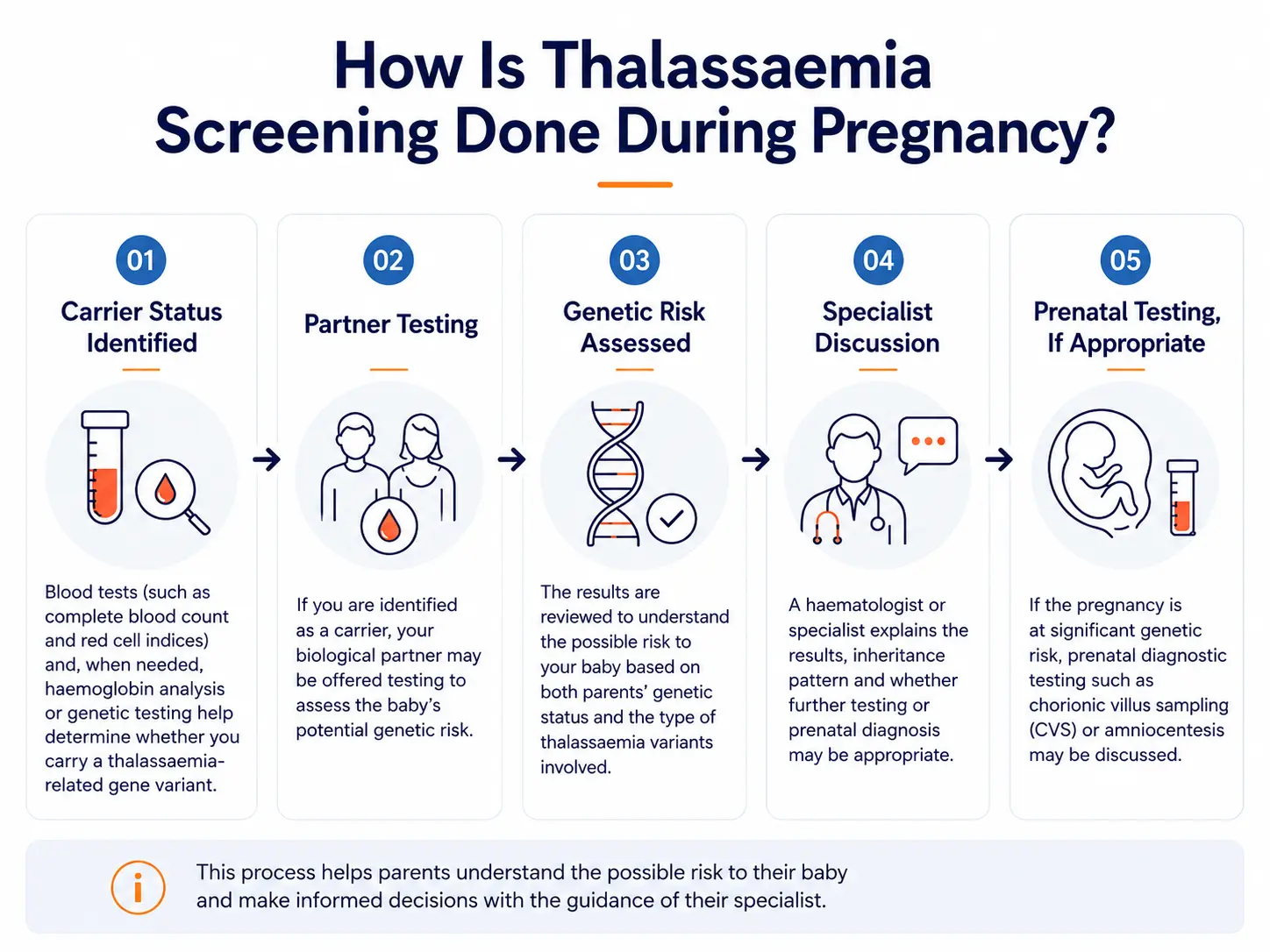
If one parent is identified as a carrier, testing the other parent can help determine whether the pregnancy may be at increased genetic risk.
If both parents are found to carry relevant variants, a specialist may recommend genetic counselling and discuss whether further testing is appropriate.
Can Thalassaemia Be Detected Before Birth?
Yes. If a pregnancy is identified as being at increased risk, prenatal diagnosis for thalassaemia may be available.
Depending on the circumstances and stage of pregnancy, diagnostic procedures can include chorionic villus sampling (CVS) or amniocentesis. These tests can examine fetal genetic material for specific thalassaemia-causing variants.
Prenatal diagnostic testing is different from a routine screening test. It should be discussed with the appropriate obstetric, genetic or haematology specialist so parents understand the benefits, limitations and possible risks.
Can a Thalassaemia Carrier Have a Healthy Baby?
Yes, a thalassaemia carrier can have a healthy baby.
Being a carrier does not automatically mean that the baby will have thalassaemia. The risk depends on the genetic status of both parents and the specific variants involved.
A specialist can explain the individual risk based on the parents’ test results.
What Should Couples Do If Both Parents Are Carriers?
If both partners are identified as thalassaemia carriers, the next step is to understand the genetic findings and discuss the available options with an appropriately qualified specialist.
Depending on the circumstances, this may include:
- Confirming the genetic results
- Understanding the inheritance pattern
- Genetic counselling
- Discussing prenatal diagnostic options
- Coordinating care with the obstetric team
The aim is to give parents clear, reliable information so they can make decisions about their pregnancy.
When Should Parents Speak to a Specialist?
Consider speaking with a specialist if:
- You or your partner is a thalassaemia carrier
- There is a family history of thalassaemia
- Both parents have been identified as carriers
- You are concerned about your baby’s genetic risk
- You want to understand prenatal testing for thalassaemia
- You have questions about genetic counselling
Early evaluation can give parents more time to understand their options.
Get Expert Care for Thalassaemia and Blood Disorders
If your child has thalassaemia or another blood disorder, Dr. Satyendra Katewa provides treatment and care for children with blood disorders, including thalassaemia. Speak with his team to understand your child’s condition and the appropriate next steps.

 WhatsApp